




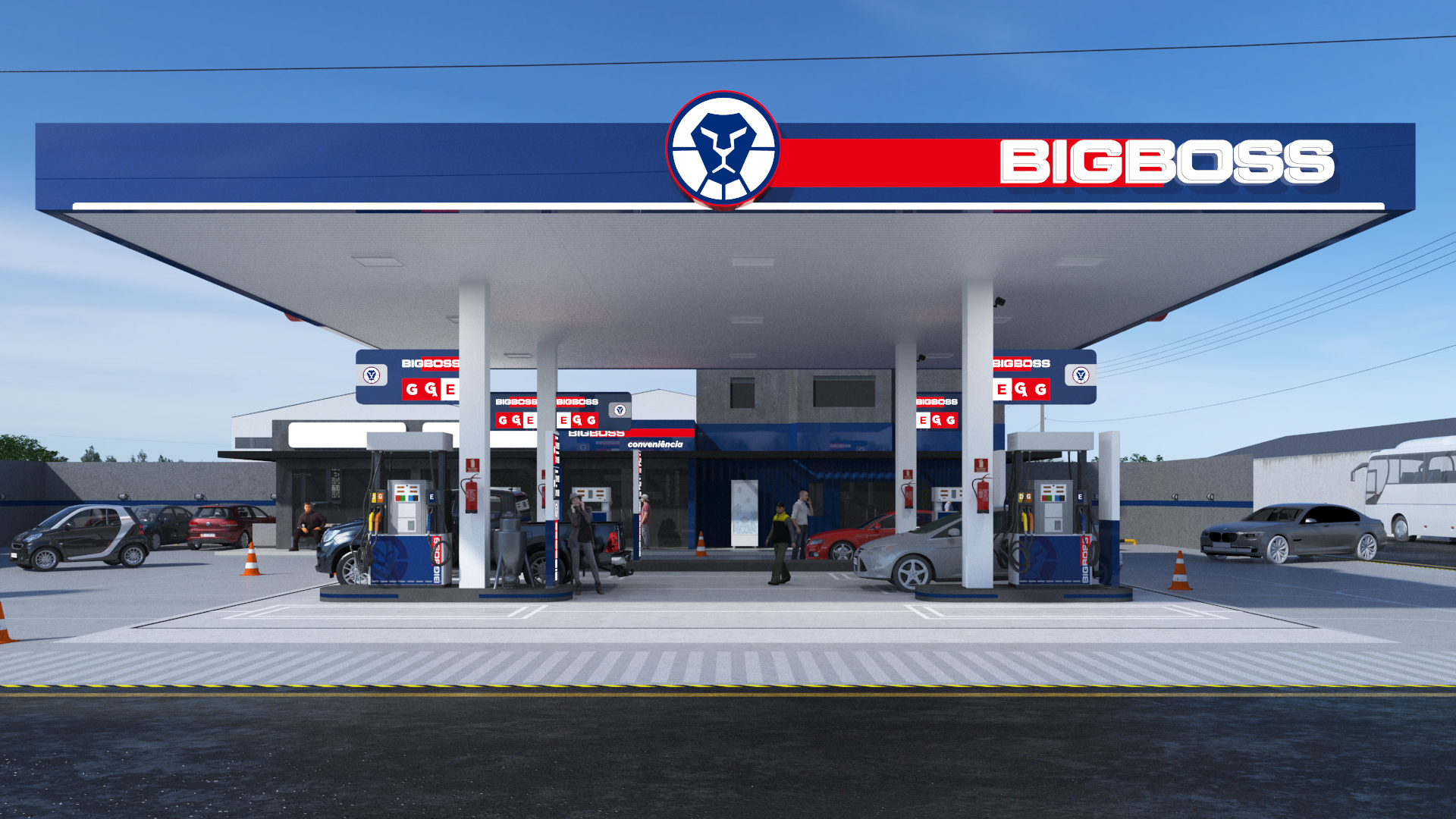
A gas station fascia is the band that wraps the canopy and carries the station or fuel brand name. To last, it needs aluminum composite material (ACM) with a high-performance finish (or a backlit flex face if the budget is tight), letters sized for the reading distance, and lighting that works after dark. Branded stations follow the supplier's image program; unbranded stations put their own name on the fascia and must avoid anything that looks like a major brand.
This guide covers what we check on every canopy fascia project: materials, service life backed by manufacturer data, letter height, lighting, electrical listing, chain standards, and maintenance. For fabrication and installation, see our gas station canopy signage service page.
What the canopy fascia has to do
The fascia is the highest and longest piece of a station's identity. Drivers see it before the pylon sign when they approach on an arterial road, and it is the first thing that shows up in the street-view photo. It answers three questions, in this order: which station is this, is it open, and can I trust it.
- Identification: a name or brand that reads at distance, day and night.
- Brand compliance: the supplier's image standard at a branded site; a distinct own brand at an unbranded site.
- Durability: color that does not fade in a few seasons, fastening that handles wind and rain, lighting that is easy to service.
The fascia depends on the canopy structure: clear height, overhang and steel profile set the size of the band. If the canopy is still being designed or rebuilt, start with our guide on how the canopy shapes visual identity.
Materials: ACM, flex face, LED, channel letters and acrylic
Most new fascias are ACM, sometimes combined with a flex face, channel letters or LED accent lines. The table sums up what each material delivers. Where we give a service life or warranty, the figure comes from the manufacturer's data sheet; where we found no source, we give no number.
| Material | What it is | Service life or warranty (manufacturer source) | Best use |
|---|---|---|---|
| ACM | Two 0.5 mm (about 0.02 in) aluminum skins over a core; 3 or 4 mm total thickness (Alucobond Plus) | Depends on the finish: AAMA 2603 covers 1 year of color retention, 2604 covers 5 years and 2605 covers 10 years (Tnemec) | New builds and reimages that must last; curves, folds and raised shapes |
| Front-lit flex face | Printed PVC banner material lit from the outside | 13 oz/yd² (440 g/m²), stated durability of 2 years (Promodigital Pro-2 data sheet) | Temporary rebrand, leased site, quick debranding cover |
| Backlit flex face | Translucent face stretched over a lit cabinet | 20 oz/yd² (680 g/m²), stated durability of 7 years on stainless or aluminum frames; steel frames must be painted and sealed (Lumijet Pro-7 data sheet) | A fully lit fascia at a lower cost than ACM with channel letters |
| LED modules | Low-voltage modules inside the cabinet, letter or accent line | Rated life above 50,000 hours, 5-year limited warranty, IP66, −40 °F to +140 °F (Current Tetra LT) | Any lit fascia; replaces fluorescent tubes |
| Channel letters | Fabricated letters (ACM, steel or aluminum) with acrylic or metal faces | Varies by maker and LED system: ask for each component's certificate | Station name standing out on an ACM band |
| Acrylic | Sheet or letter face, white or colored | Varies by maker: ask for the data sheet | Lit logos and channel letter faces |
Run the LED math before comparing bids. A fascia lit 12 hours a night runs 4,380 hours a year, so 50,000 hours is a little over 11 years of use (our calculation). The warranty in that example is 5 years, and it covers the module, not the labor to replace it.
ACM: what to put in the bid request
Two quotes for "ACM fascia" can carry very different panels. Ask for these items in writing:
- Thickness: 3 or 4 mm with 0.5 mm aluminum skins, as in the Alucobond Plus data sheet.
- Core: standard polyethylene or a mineral, fire-retardant core. Alucobond Plus, with a mineral core, is classified B-s1, d0 for reaction to fire on the same sheet.
- Finish: which system (PVDF, FEVE or polyester) and which AAMA standard it meets. AAMA 2605 requires 10 years of South Florida exposure with no more than 5 ΔE of color change, a chalk rating of at least 8 and at least 50% gloss retention (PPG).
- Warranty: a certificate issued by the panel or coating manufacturer, with term and conditions, not only the installer's workmanship warranty.
- Substructure: corrosion-protected steel tube framing, a defined attachment to the canopy, and panel joints that do not let water in.
Brand color causes most rework. Get the exact panel color reference and order the whole fascia from one production lot; panels from different lots can show a visible shift side by side.
Letter height and fonts: how big the letters must be
The useful question is not "which font looks best" but "from where does the driver need to read it, and how much time is there". The standard method comes from traffic engineering. Section 2A.08 of the MUTCD, 11th edition, says a minimum ratio of 1 inch of letter height per 30 feet of legibility distance should be used (FHWA, MUTCD).
Step by step:
- Take the posted speed of the road in front of the station.
- Pick how many seconds the driver should have to read and decide to turn in. We use 4 seconds as an example; adjust it to your driveway layout.
- Reading distance = speed in feet per second × seconds (mph × 1.47 = ft/s).
- Minimum capital letter height in inches = reading distance in feet ÷ 30.
| Road speed | Feet per second | Distance covered in 4 s | Minimum letter height |
|---|---|---|---|
| 25 mph | 36.7 ft/s | 147 ft | 4.9 in |
| 35 mph | 51.3 ft/s | 205 ft | 6.8 in |
| 45 mph | 66.0 ft/s | 264 ft | 8.8 in |
| 55 mph | 80.7 ft/s | 323 ft | 10.8 in |
| 65 mph | 95.3 ft/s | 381 ft | 12.7 in |
These are our calculations on the MUTCD ratio, and they are a floor, not a target. Section 2D.05 notes that legibility distance has to absorb inattention, other vehicles blocking the view, bad weather and weak eyesight (FHWA, Chapter 2D). On a highway site, the fascia band is usually tall enough for letters well above the minimum.
Choosing the typeface
- Sans serif with a solid stroke: thin, condensed or script faces lose legibility at distance and under LED glare.
- Few words: the station name and at most one qualifier. Phone numbers and slogans belong on the pylon or the c-store front.
- Contrast: light letters on a dark band or the reverse. Red on orange and blue on black disappear at night.
- Letter spacing: do not squeeze the name to fit the band; lower the height or change the layout.
- Existing logo: measure the main letters of the mark, not the box around the whole logo.
Lighting: the four common setups
An unlit fascia turns into a dark stripe after sunset. A branded site usually has lighting specified in the supplier's image manual; an unbranded site has to decide it alone.
| Setup | How it works | Watch out for |
|---|---|---|
| Backlit cabinet | Translucent flex face stretched over internal LEDs | Even light depends on LED depth behind the face; dirt and insects inside the cabinet |
| Illuminated channel letters | LEDs inside each letter on an ACM band | Power supplies reachable for service; each letter sealed |
| LED accent lines | Lit bands that trace the shape of the fascia | Diffusers that do not yellow; joints without dark spots |
| Electronic message center (EMC) | Full-color screen showing images and video | Night brightness control and local sign code limits |
For EMCs, the International Sign Association recommends that night brightness stay no more than 0.3 footcandle above ambient light, measured at a distance that depends on the screen area, with automatic dimming (ISA, 2016). A glaring fascia does not make the name easier to read, and it draws neighbor complaints.
Every lit fascia is an electric sign. Electric signs fall under Article 600 of the National Electrical Code (NFPA 70), and the product standard is UL 48, Electric Signs, whose current edition was last revised on May 14, 2025 (UL Standards). Ask the fabricator for listed components and a listing label on each sign section.
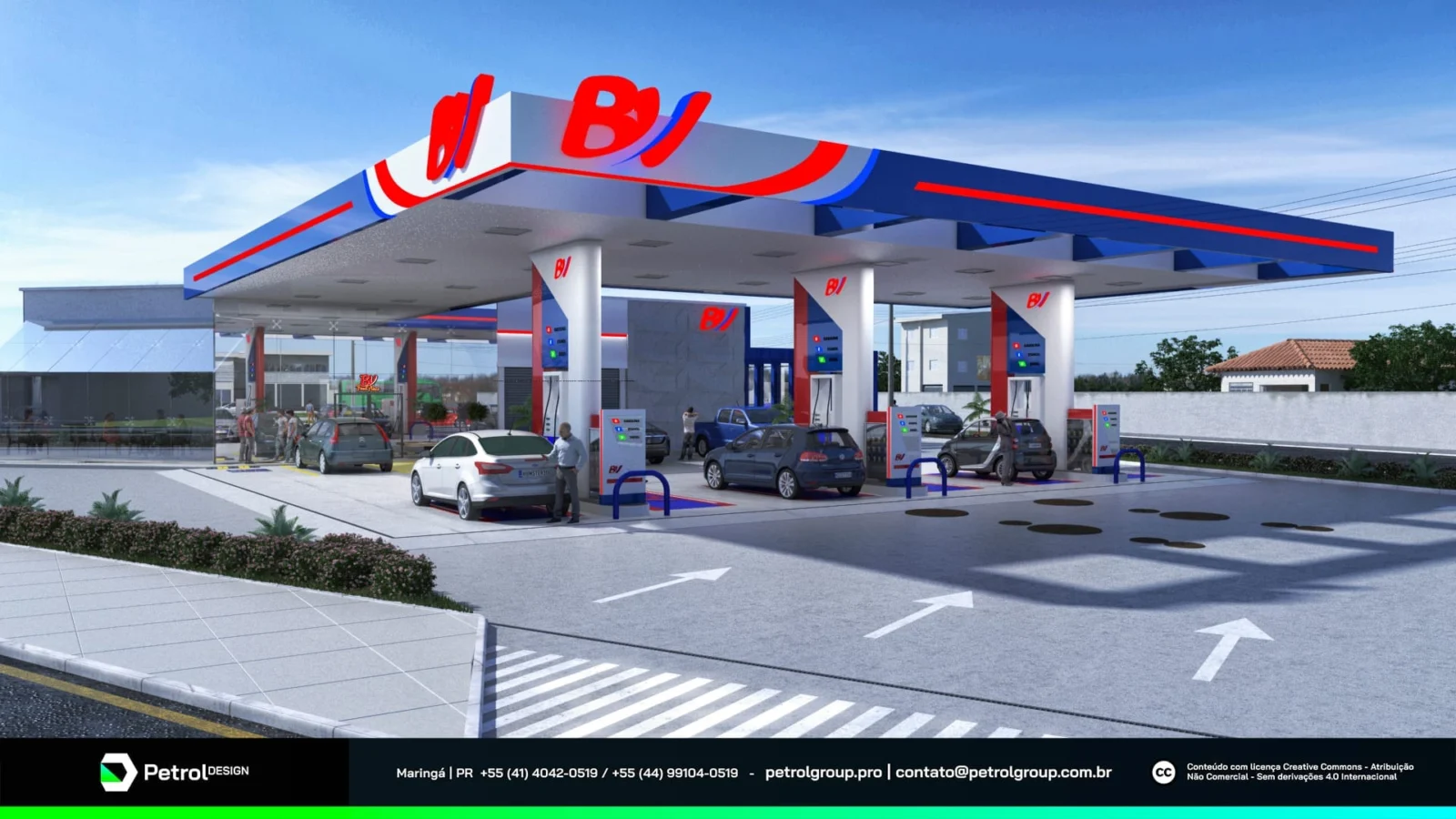
At Posto BV in Castro, Brazil, the old flex-face fascia had faded. The project replaced it with ACM and recessed lit lines that trace the BV mark along the fascia, and rebuilt the pump toppers in the same design language.
Branded vs. unbranded: who decides what goes on the fascia
In the U.S. there is no federal rule saying what a fascia must show. The brand question is commercial. NACS notes that about 40% of the gasoline sold in the country is branded fuel from one of the top 20 brands, that at unbranded stations the fuel brand is usually the store name, and that branded retailers can receive an imaging allowance to improve the look of the site (NACS, June 19, 2026).
| Situation | What drives the fascia | Source |
|---|---|---|
| Branded site under a franchise or supply agreement | The supplier's image standard: colors, logo placement, lighting, approved vendors | Your supply contract and image manual |
| Misbranding | Willful misbranding of motor fuel or other trademark violations by the franchisee are listed among the events that can justify termination | PMPA, 15 U.S.C. 2802(c)(10) |
| Unbranded site | Own name and colors; avoid color schemes and marks that copy a major brand | Trademark law and good practice |
| Debranding at contract end | Cover or remove brand elements on the schedule in the agreement | Your supply contract |
NACS also reports that price is still the number-one factor in where drivers buy gas, while one in 10 motorists name fuel brand as the top reason. For an unbranded site, that means the fascia must sell the station name and make it look open and well run, because the brand halo is not there. Our guide on independent vs. branded stations covers the business side; the gas station rebranding page covers the changeover.
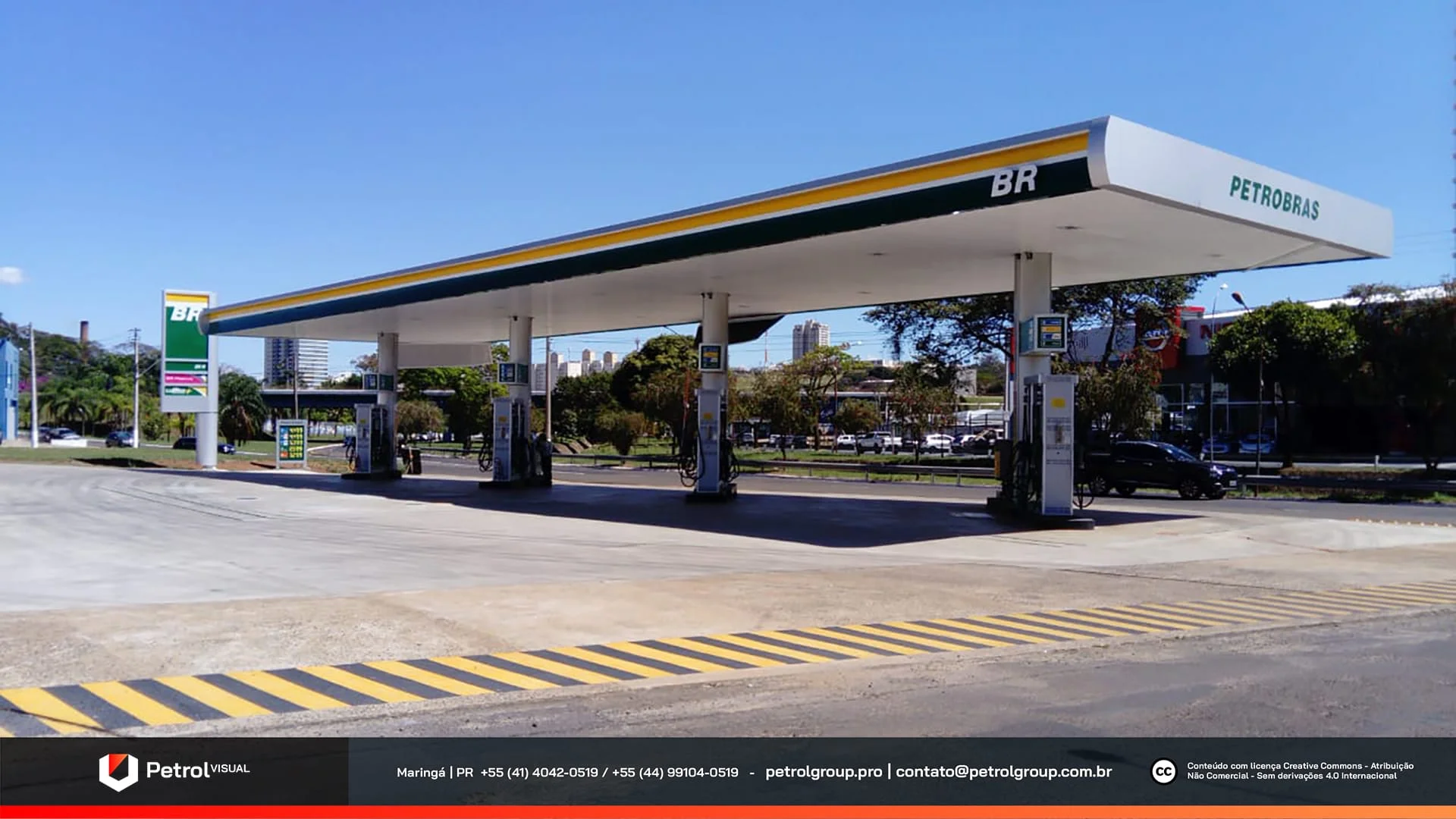
Brazil is stricter, and it is a useful comparison if you work in both markets. Under ANP rules, a branded station must show the distributor's brand at least on the fascia and the pylon, visible at distance day and night, and an unbranded station must remove the distributor logo and its color combination (ANP retailer handbook, May 2026). At the Rede BR sites in Maringá, the job was to apply a well-known brand standard to new structures: ACM in the official colors plus lighting for day and night reading.
Chain standards
Across a chain, the fascia is where differences show first: a slightly different red, a thinner letter, one site with a flex face and the next with ACM. What works on multi-site programs:
- Protect the name before you roll it out. Federal trademark registration with the USPTO is the usual step before ordering dozens of fascias with a new mark.
- A fascia application manual: band height, letter height by road type, logo clearances, colors with panel and vinyl references.
- Repeatable modules: corner, straight run and front sections designed to cover canopies of different sizes without redrawing.
- One panel supplier and one LED system per rollout phase, so color and light temperature stay the same.
The Rede BR sites show the balance: separate designs for each location, with ACM as the base material of every element to keep the finish uniform across units. At the Vale+ network in Greater São Paulo, the ACM fascia received raised pieces that form a color gradient and the logo on the side face of the canopy; the price sign, store front and pump toppers followed in the same standard.
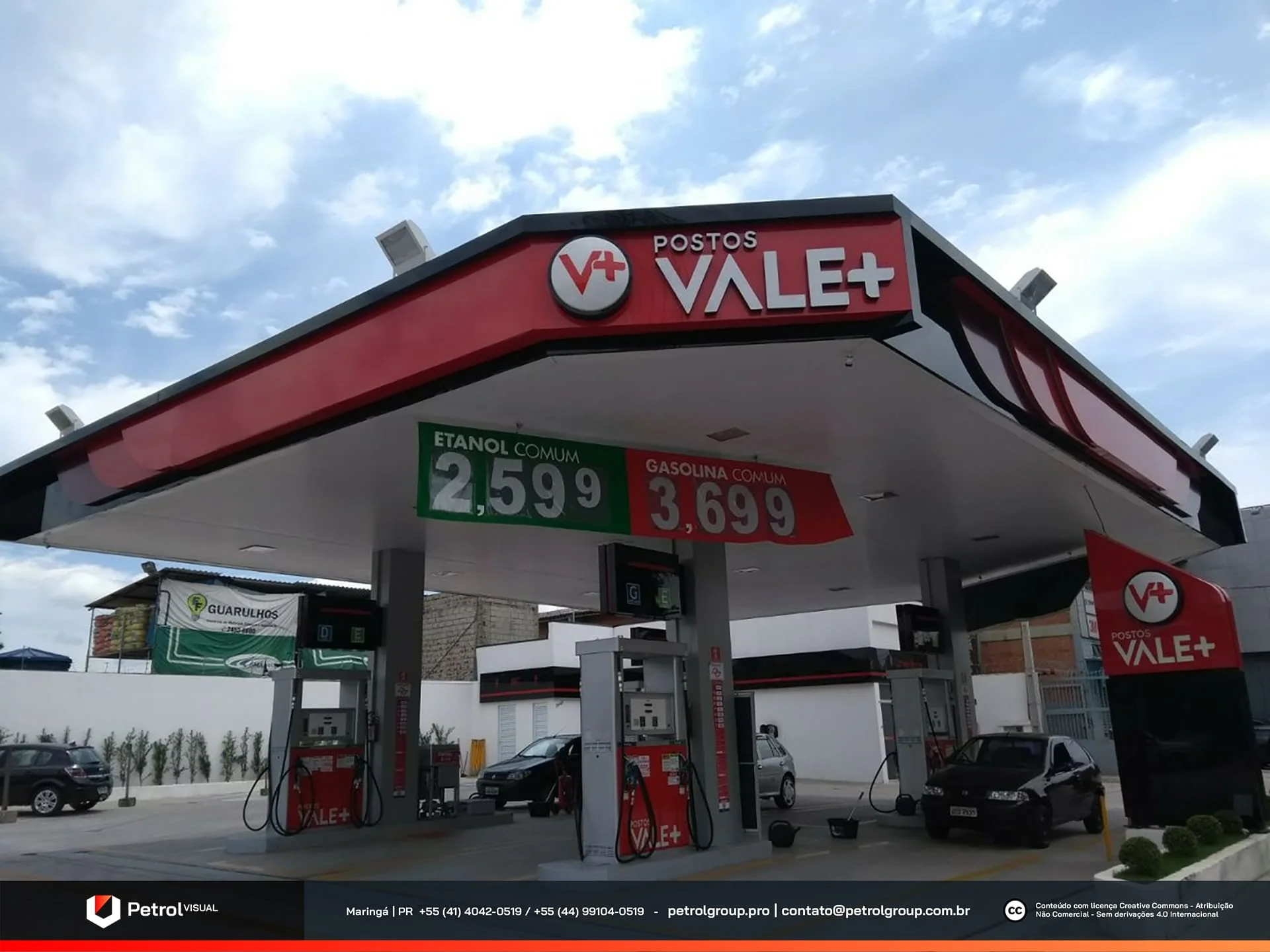
The fascia should match the pylon sign: same colors, same typeface, same lighting logic. Our guide on the importance of the gas station pylon covers price signs and display rules.
Structure and jobsite safety
- Wind: a taller or more enclosed fascia adds load to the canopy. A licensed engineer should check it under the building code your jurisdiction adopted, and the permit set should show the attachment details.
- Fall protection: in construction work, each employee on a surface with an unprotected side or edge 6 feet or more above a lower level must be protected by guardrails, safety nets or personal fall arrest systems (OSHA 29 CFR 1926.501(b)(1)). Fascia installs and most service calls are above that height.
- Permits: many cities need a sign permit and an electrical permit for a lit fascia, and some count canopy lettering toward the allowed sign area. Check your local sign code before final design.
Maintenance
| Item | What to check | Warning sign |
|---|---|---|
| ACM panels | Wash with a soft sponge, water and mild detergent; nothing abrasive | Streaks below joints, bulging panels |
| Seals and joints | Sealant intact, canopy gutters clear | Water inside the cabinet, rust on framing |
| Lighting | Dead modules, hot power supplies, timer or photocell | Half-lit letters, dark spots on the band |
| Flex face | Tension, lamination, color | Wavy face, fading, torn edges |
| Fasteners | Screws, rivets, angles | Sections rattling in wind, new gaps |
Keep the panel, coating and LED warranty certificates with the as-built drawings. Without them, a 5- or 10-year manufacturer warranty is hard to claim.
How to buy a fascia
Cost depends on linear feet of canopy, band height, material, lighting type, the condition of the existing structure and freight. Compare bids by specification, not by bottom line. Petrol Group has worked only with gas stations for 29 years, with 983+ projects in 16 countries, and handles both the brand design and the fabrication drawings. See more fascias in our portfolio; to settle branding, layout and budget before fabrication, start with consulting.
Frequently asked questions
What is the best material for a gas station canopy fascia?
For long life, ACM with a finish that meets AAMA 2605, which requires 10 years of South Florida exposure with no more than 5 ΔE of color change. A backlit flex face costs less and has a stated durability of 7 years on aluminum or stainless frames in the maker's data sheet. A front-lit flex face is rated at 2 years and works as a temporary solution.
How tall should fascia letters be?
Use at least 1 inch of letter height per 30 feet of reading distance, the MUTCD ratio. On a 45 mph road, giving drivers 4 seconds, that is about 8.8 inches. On a 65 mph highway, about 12.7 inches, and larger is better.
Can an unbranded station use colors similar to a major brand?
It is a trademark risk. Color schemes and trade dress can be protected, and a branded supplier will act against confusing look-alikes. Choose a palette that does not recall any major brand and register your own mark.
How long do LED fascia lights last?
Quality sign modules state a rated life above 50,000 hours; the Current Tetra LT, for example, carries a 5-year limited warranty. Lit 12 hours a night, a fascia reaches 50,000 hours in about 11 years. Keep power supplies accessible so service does not require opening the whole band.
Does a lit canopy fascia need UL listing?
Electric signs are covered by UL 48 as a product standard and by NEC Article 600 for installation. Ask the fabricator for listed components and a listing label on each section, and confirm with your local inspector before final inspection.
What happens to the fascia when a branded contract ends?
The supply agreement sets the debranding schedule and who owns the brand elements. Plan a temporary flex-face cover so the site keeps an identity while the new fascia is fabricated. Under the PMPA, trademark violations by the franchisee are among the events that can justify termination.
How do I clean an ACM fascia?
With a soft sponge, water and mild detergent, never abrasive pads or solvents. The work is done at height, so it falls under OSHA fall protection rules above 6 feet. Use the visit to check joints, LEDs and fasteners.