




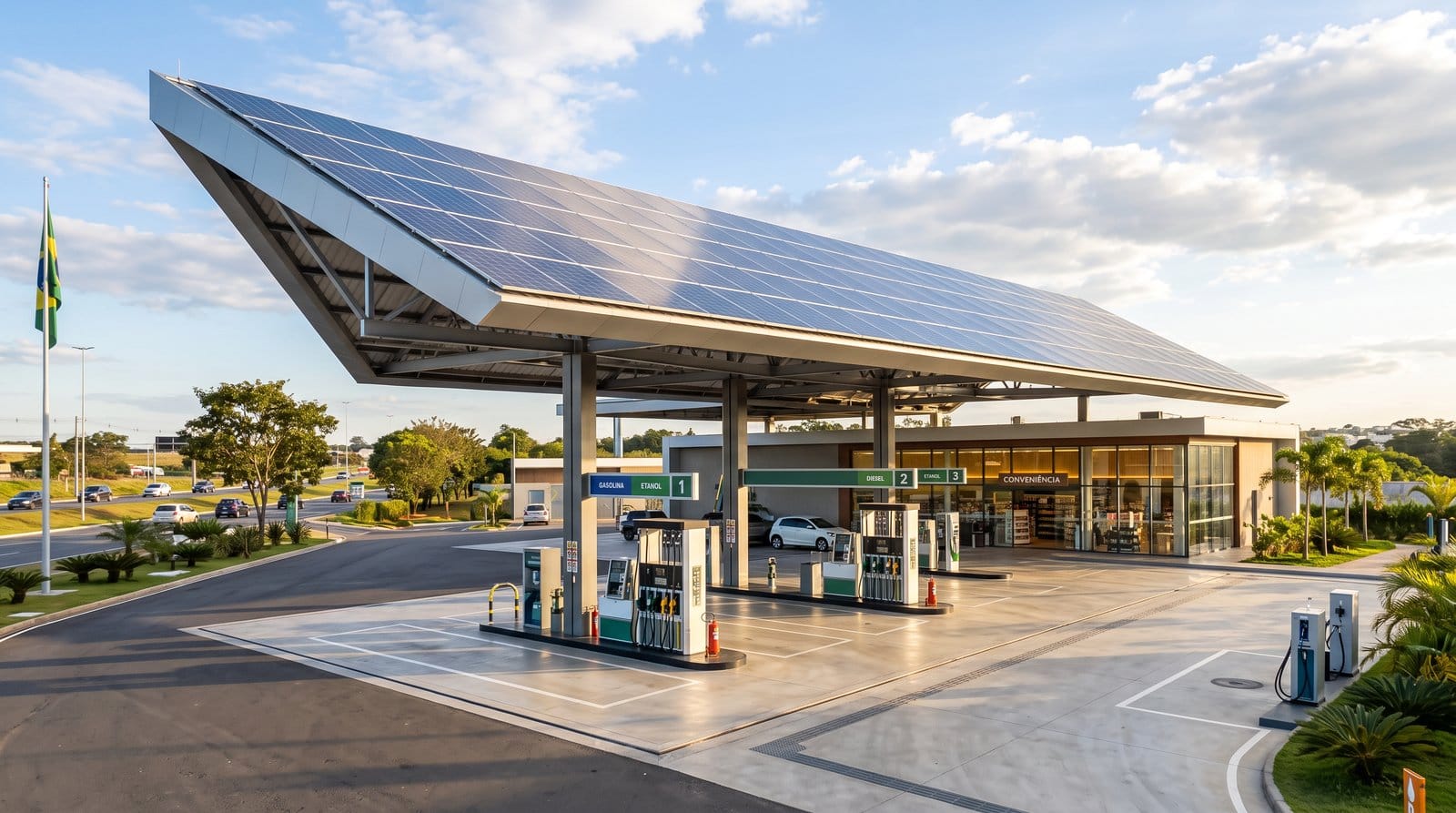
Electricity is one of the largest operating costs of a gas station. In Brazil, where Petrol Group designs most of its projects, a mid-size station uses 15,000–45,000 kWh per month, and the power bill is one of its biggest expenses. Solar power solves part of that problem with a proven return. Petrol Group has already included solar systems in gas station projects across Brazil.
System size for a typical gas station
To cover 50–70% of the consumption of a mid-size station: a 50–120 kWp system. A large station (with a convenience store, car wash and intensive lighting): 150–250 kWp. These ranges come from our projects in Brazil; how much each kWp produces depends on the sun at your site, so for a U.S. location estimate it with the PVWatts Calculator from the National Laboratory of the Rockies, a U.S. Department of Energy lab. The biggest energy users at a station are forecourt lighting (LED — already more efficient), convenience store refrigeration, air compressors and water pumps.
Where to install the panels at the station
The station canopy is the natural support for solar panels — it is already in place, oriented and sloped. A standard gas station canopy (600–1,200 m², about 6,500–12,900 sq ft) can hold 150–300 kWp of panels. The existing canopy structure can usually carry the weight of the panels, but a structural engineer must assess it to confirm, and the installation needs the permits required by your local authority having jurisdiction (AHJ). On a new station, the panels can be planned from the start in the gas station architecture project.
Investment and payback
Installed cost per kWp, electricity rates and incentives vary widely by country, state and utility — and so does payback. In Brazil, with 2026 installation costs and the country’s high commercial electricity rates, payback runs 24–42 months. In the U.S., get quotes from local installers, check your utility’s commercial rate and the federal, state and utility incentives available to you; incentive rules change often, so confirm eligibility with your tax advisor. After payback, the system delivers pure savings for another 20–25 years.
FAQ
Does solar work with net metering?
It depends on where the station is. In the U.S., net metering (or net billing) rules are set by each state and utility: some credit the power you send to the grid at the retail rate, others at a lower rate. Check the current rules with your utility or your state public utility commission before sizing the system.
See also: gas station sustainability and EV chargers at gas stations.