




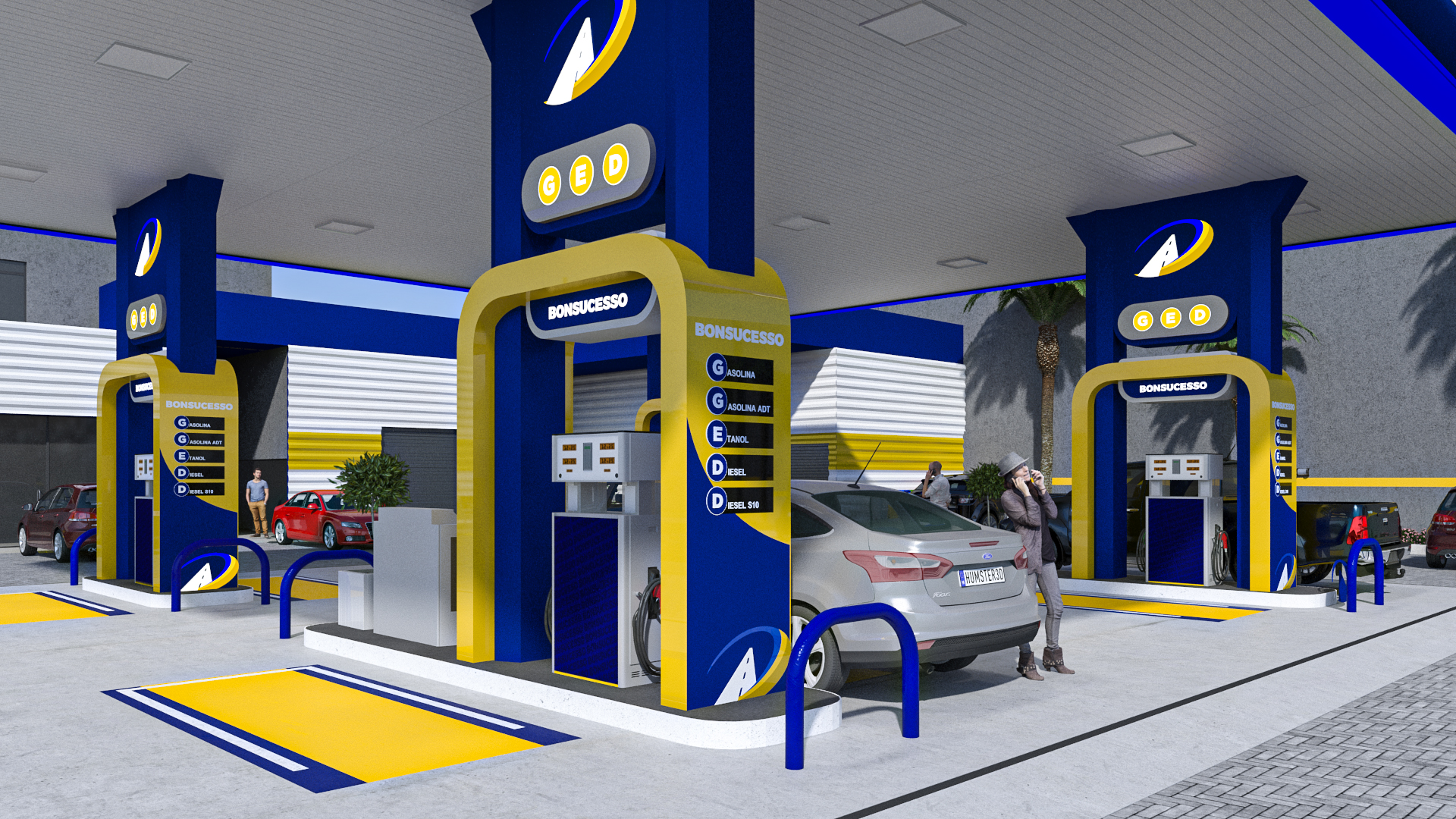
The visual identity of your gas station plays a crucial role in attracting customers. Among the most important design elements is the canopy fascia, which must be carefully planned to ensure visibility, modernity, and professionalism. In addition, choosing the right fonts for signage and durable materials—such as illuminated letters and ACP panels—can make all the difference in how your station communicates with drivers.
In this article, we’ll explore the best font and material options for gas station signage, helping you make smarter strategic decisions to strengthen your brand and attract more customers.
Why signage matters for gas stations
A gas station sign is not just decoration—it has essential functions:
- – Quick identification: Drivers moving at high speeds must recognize your station instantly.
- – Brand reinforcement: A well-designed sign strengthens your station’s identity and conveys professionalism.
- – Standing out from competitors: In areas with multiple stations, a striking fascia can give you the edge.
- – Enhancing the customer experience: Organized, well-lit signage makes it easier for customers to navigate your site.
Now that we understand its importance, let’s look at the best fonts and materials to achieve long-lasting, effective results.
Choosing the best font for gas station signage
Font choice has a direct impact on readability and visual appeal. Consider these tips:
Prioritize legibility
Drivers must quickly identify your brand. Avoid fonts with too many details or flourishes. Options like Fjalla One, Ubuntu Bold, and Saira work very well for canopy signage.
Maintain a professional look
Stay away from decorative or handwritten fonts that reduce clarity. Instead, use clean and corporate options such as Viga-Regular or Kanit, which project credibility and trust.
Size and spacing matter
Overly small or tightly spaced letters are hard to read. Ensure proper spacing and proportional sizing for maximum visibility.
Use high-contrast colors
The font color must stand out against the fascia background. For instance, if your canopy fascia is blue, white or yellow letters provide excellent contrast and visibility.
Best materials for gas station fascia
The material of the canopy fascia directly impacts durability and brand image. Here are the top choices:
ACP (Aluminum composite panel)
Highly durable, weather-resistant, and modern in appearance. ACP panels are one of the most popular materials for gas station fascias.
Benefits:
- – Long lifespan
- – Easy to maintain
- – Modern, premium finish
- – Weather resistance
3D raised letters
Add depth and sophistication to your branding. They can be made from ACP, PVC, or acrylic and are often paired with lighting.
Benefits:
- – Strong visual impact
- – Option for backlighting
- – Resistant materials
Illuminated letters and panels
Essential for nighttime visibility and cloudy days. LED backlit letters and lightbox panels provide high impact with energy efficiency.
Benefits:
- – Excellent nighttime visibility
- – Energy savings with LEDs
- – Wide range of color and shape customization
Acrylic panels
Modern and versatile, suitable for both canopy fascia and interior signs. Acrylic’s transparency and gloss give a refined look.
Benefits:
- – Premium finish
- – Easy to customize
- – Durable and strong
Tensioned banners
A cost-effective solution that still offers professional results. High-quality digital prints can also be internally illuminated.
Benefits:
- – Lower cost
- – Quick installation
- – Option for internal lighting
Extra tips for effective gas station signage
- – Ensure proper lighting: If your fascia isn’t illuminated, invest in exterior lights for visibility.
- – Stay consistent with brand identity: Use your brand’s colors and style to build recognition.
- – Choose weather-resistant materials: Gas stations face sun, rain, and dust daily. Durability is key.
- – Perform regular maintenance: Cleaning and small repairs keep your fascia attractive and functional.
- – Work with professionals: A qualified designer ensures your signage is both functional and visually appealing.
The impact of a well-designed fascia
Your canopy fascia is one of the most important elements shaping customer perception and brand recognition. By choosing readable fonts and durable, high-quality materials such as ACP, acrylic, and illuminated lettering, you ensure visibility, professionalism, and long-term impact.
If you want your station to stand out and attract more customers, invest in a carefully planned fascia project. With the strategies in this article, you’ll be prepared to make the right decision for your gas station branding.
Do you want to make a difference and ensure the success of your gas station? Rely on the support of the only business group exclusively dedicated to the gas station sector in Brazil, with over 25 years of expertise and offering personalized consulting. Contact us for more information!
With Petrol Group, you have everything for your gas station in one place!
Learn more about: The importance of gas station facade design
Learn more:
The gas station fascia is the front structure that surrounds the canopy over the fueling area, where the station’s name and visual identity are usually displayed. Its purpose is to highlight the brand, ensure visibility, and reinforce the station’s overall visual communication.
To make a gas station stand out, invest in a strong visual identity, effective lighting, clear signage, and a well-positioned price totem. In addition, provide quality customer service, attractive promotions, and differentiators such as a convenience store and additional services.