




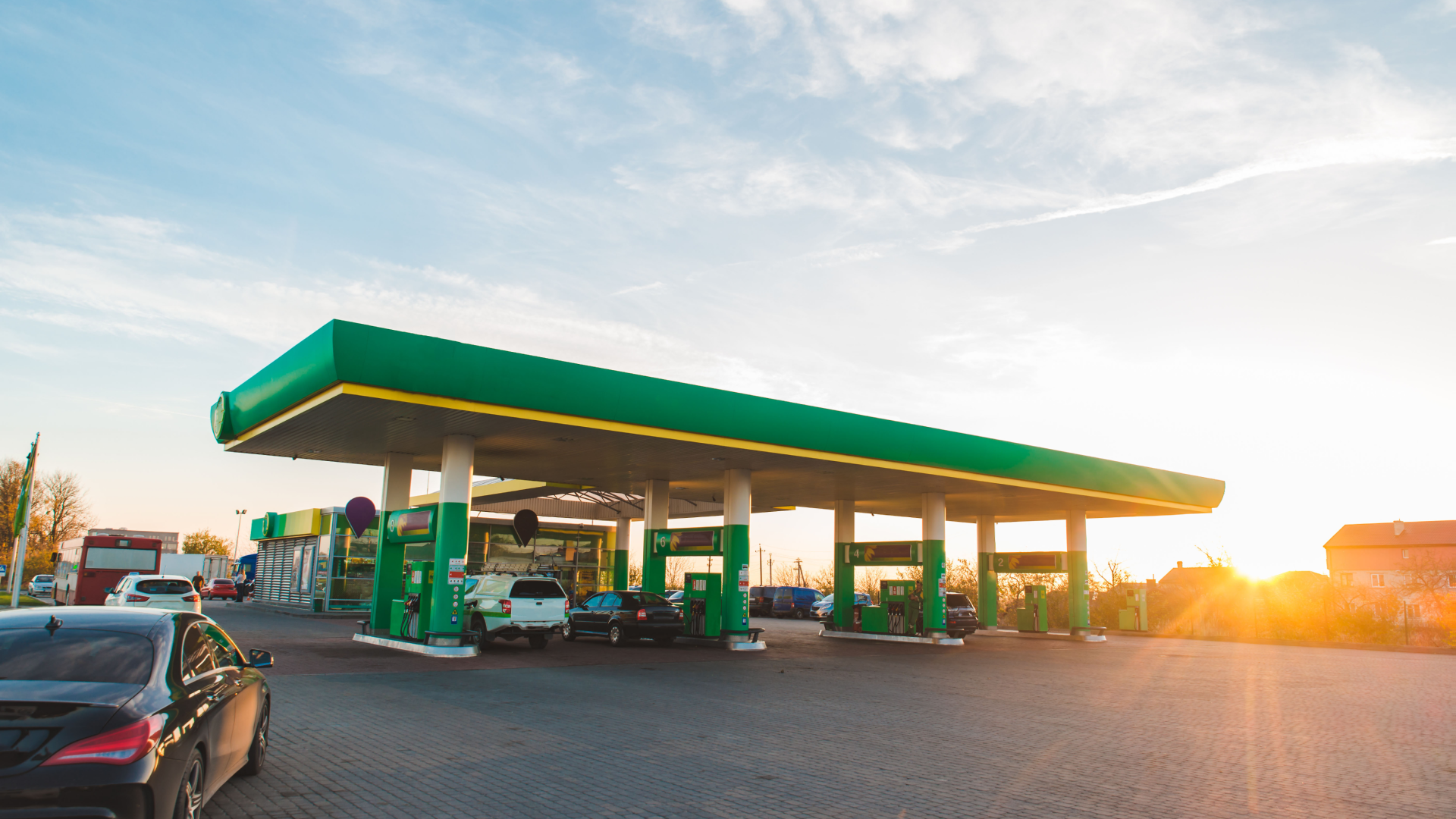
The choice between joining a fuel brand and operating independently is fundamentally a financial decision — but it is often made on emotion, brand familiarity, or sales pressure. The Petrol Group team breaks down the real numbers so you can model the decision correctly.
Revenue side: does the brand drive more volume?
In markets with strong brand loyalty, a well-known brand can drive 15–25% more fuel volume than an equivalent independent site, primarily through loyalty programme card usage and brand recognition for new customers. In price-sensitive markets or rural locations where consumers know their local station by name rather than brand, this volume premium often disappears. Model your specific market before assuming the volume benefit exists.
Cost side: what the brand actually costs
Initial investment: Branded canopy, fascia, pump branding, signage — typically USD 80,000–250,000 depending on brand standards and site size. Petrol Group executes these projects across all major brands. Ongoing royalty: 1–4 cents per litre in most markets, or a fixed monthly fee. On 300,000 litres/month, that is USD 3,000–12,000/month in royalties alone. Supply premium: The difference between the brand’s wholesale price and the open market price. This varies by market and contract but is typically 0.5–2 cents/litre. Required upgrades: Brand identity refreshes every 5–10 years, typically at franchisee cost. Budget USD 30,000–80,000 for a mid-cycle rebrand.
5-year ROI model: branded vs independent
For a medium-sized urban station (300,000 litres/month): Branded scenario assumes 20% volume premium, 2 cents/litre royalty, 1 cent/litre supply premium, USD 120,000 initial branding investment. Independent scenario assumes base volume, no royalties, open market supply. At a 4 cent/litre gross margin, the branded station nets roughly USD 60,000/year more in revenue from volume — but pays USD 36,000–72,000/year in royalties and supply premium. The net advantage narrows significantly, and the initial investment payback period extends to 5–7 years. In lower-margin markets or lower-volume sites, the independent model frequently wins.
When branded makes sense
High-traffic locations in brand-loyal markets. New operators who value the training, compliance support, and operational framework. Sites where the brand’s loyalty programme is dominant (e.g. corporate fleet card programmes). Operators planning a quick exit — branded sites typically command higher valuations from brand-affiliated buyers.
When independent makes sense
Price-competitive markets where consumers shop on price. Operators with strong local brand identity and customer loyalty. High-volume sites where the royalty cost outweighs the volume benefit. Operators who want full pricing flexibility and supplier freedom.
See also: franchise evaluation guide and profit margins guide.
ANP data: about 49% of Brazil's more than 46,000 gas stations operate as unbranded (white-flag) stations.
Branded vs Independent Station
| Aspect | Branded | Independent (White Flag) |
|---|---|---|
| Fuel supply | Exclusive to one distributor | Free to buy from multiple distributors |
| Brand on the canopy | The distributor's brand | The station's own brand |
| Purchase price | Set by the distributor's price list | Negotiated on each purchase |
| Marketing support | Yes, from the distributor | Up to the station |
| Management freedom | Lower (loyalty contract) | Higher |
| Visual identity | The distributor's standard | Must create its own |