




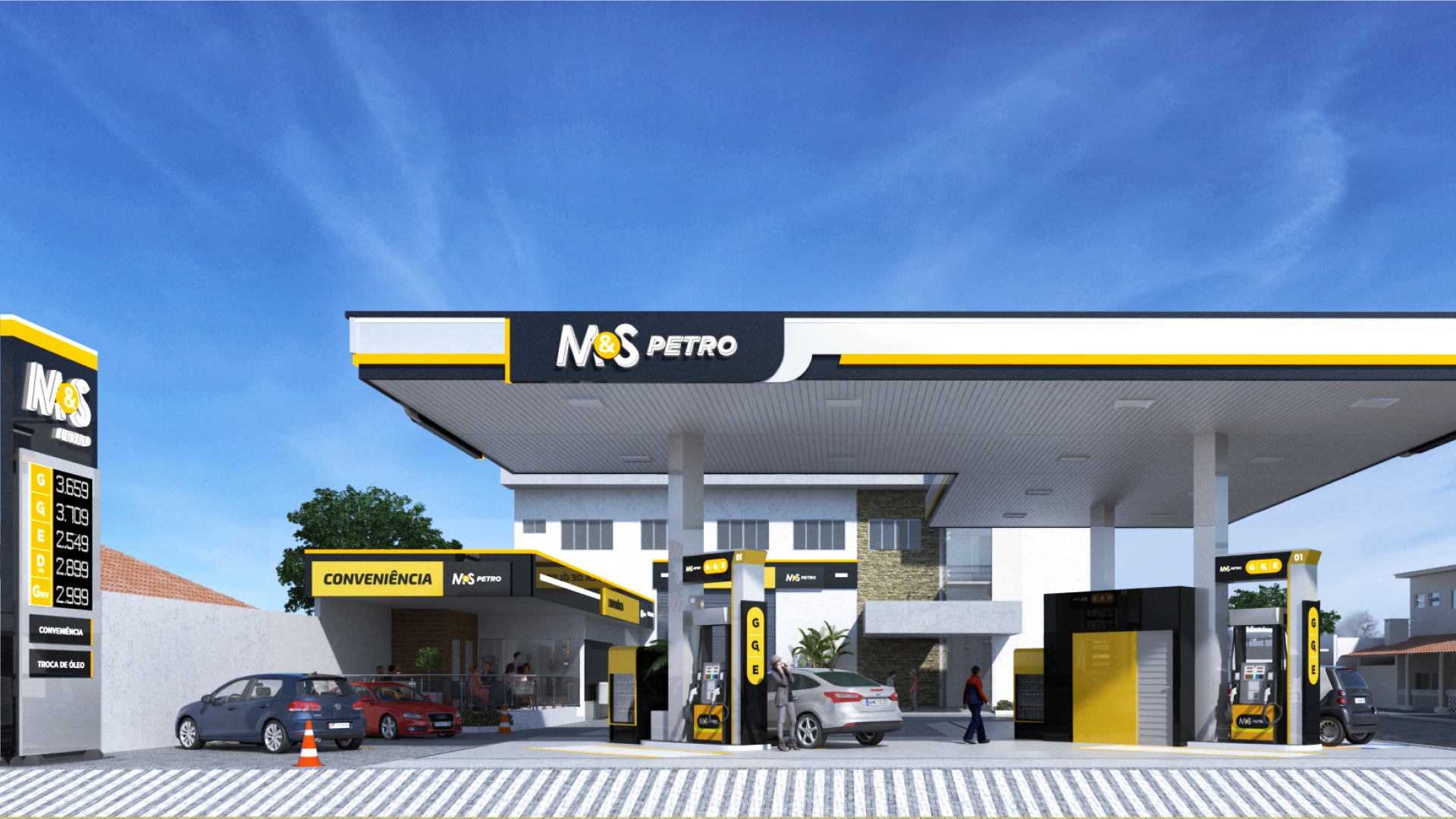
Gas station design in 2026 is no longer just about putting up a canopy and installing dispensers. It is a competitive tool — the way your station looks determines how much fuel you sell, how long customers stay, and whether they come back. The Petrol Group team has completed 593+ gas station design projects across 16 countries.
The 4 design elements that drive revenue
Canopy and forecourt lighting — a well-lit station visible from 500+ meters attracts 22% more impulse stops at night. Fascia (testeira) — the first brand element the driver sees. Material, color and lighting make or break the brand impression. Convenience store facade — the connection between the forecourt and the store. Poor design here means customers abastece e vai embora. Good design pulls them inside. Price totem — visibility, legibility, and positioning determine whether you capture passing traffic or lose it to the competitor down the road.
Design trends for gas stations in 2026
The leading trend is the elimination of visual clutter: fewer materials, bolder use of brand color, and integrated lighting that defines the station silhouette at night. LED technology has made it possible to light the entire forecourt with architectural precision. Stations that invested in design renovation in 2024-2025 are reporting 15-25% increases in convenience store revenue — not because they changed their product, but because the store became visible and inviting.
The design process: from concept to execution
A complete gas station design project goes through three phases. Concept: brand identity, color palette, material selection, 3D visualization for client approval. Technical specification: detailed drawings for every element (fascia, totem, column cladding, pump communicators), material specs, and supplier packages. Execution: coordination with the structural and electrical project, supplier qualification, and site verification on installation.
Frequently asked questions
How long does a complete gas station design project take?
From signing to final deliverable: 6-10 weeks for a single station. For a network of 10+ stations: 12-16 weeks (the brand manual takes longer to develop but reduces per-station time significantly).
Can I rebrand without shutting down the station?
Yes. Most design updates (fascia, column cladding, totem, pump communicators) can be installed over 3-5 nights without interrupting operations. The station stays open during day hours.
Petrol Group has 25+ years designing gas stations across 16 countries. Explore our service or browse the portfolio.