




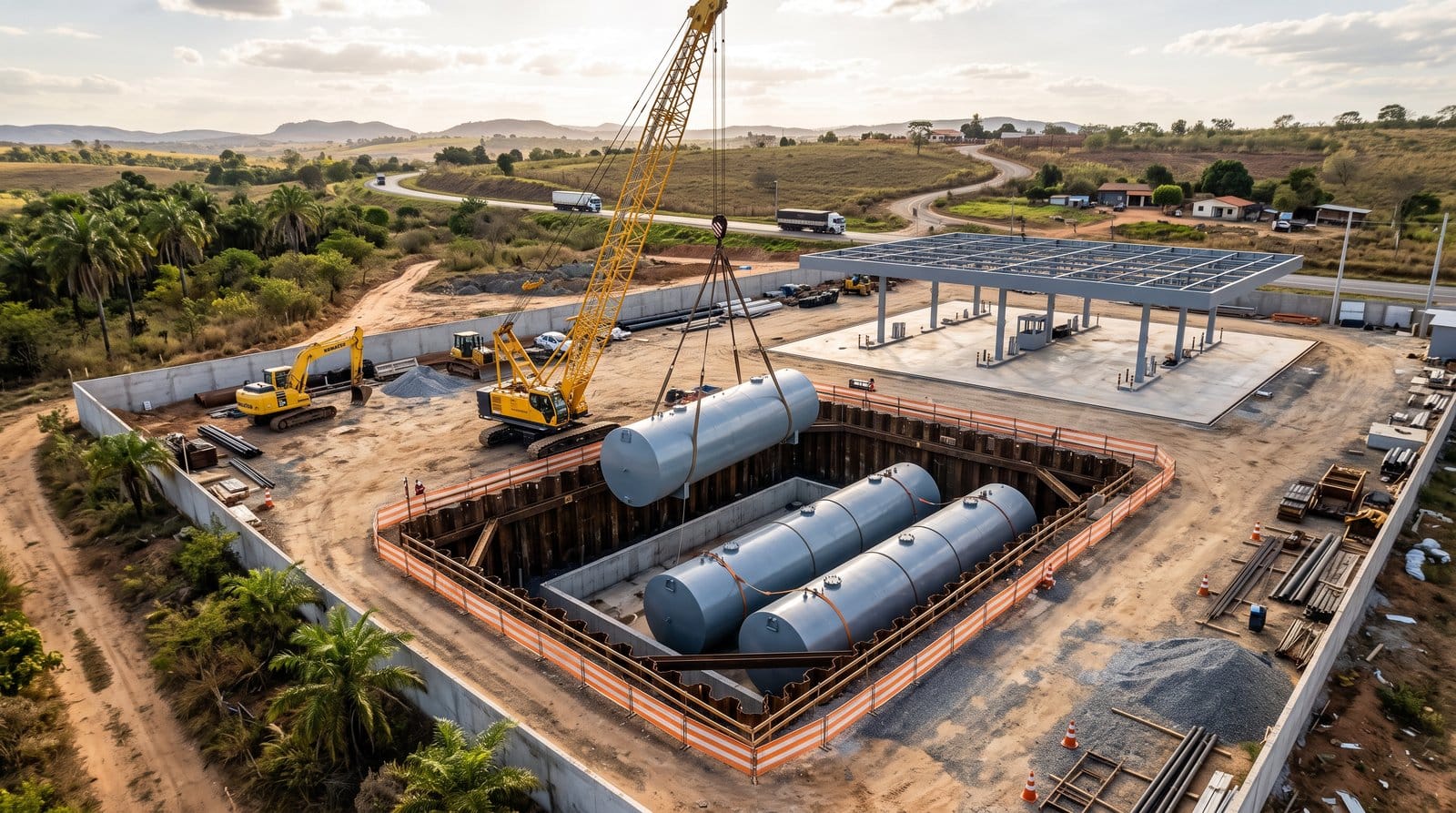
In the U.S., no single agency licenses a new gas station. Approval comes in layers: your city or county handles zoning, building and fire permits; in most states an EPA-approved state program runs the underground storage tank (UST) rules; and federal rules from EPA, the Department of Justice (accessibility) and the FTC set requirements the design has to meet. Knowing them is what lets you build, receive fuel and open on schedule. Codes vary by edition and address, so confirm the details with your engineer of record and your authority having jurisdiction (AHJ).
Who approves a gas station in the U.S.
Think of it as a set of approvals, not one license. The usual reviewers are:
- Zoning or planning: whether a fuel station is allowed on the parcel and on what terms (setbacks, canopy and sign limits, parking). This is local law, so start with the city or county.
- Building and fire: the building department reviews the construction documents, and the fire marshal reviews fuel storage and dispensing under the fire code the jurisdiction adopted, such as NFPA 30A or the International Fire Code.
- State UST program: EPA lets approved state programs operate in lieu of the federal one, and 39 states plus the District of Columbia have approved programs under the 2015 UST regulation. Some want notice before work starts: Texas, for example, asks for construction notification 30 days before a UST installation begins (TCEQ).
- Roads: the state transportation agency or local government that regulates the road reviews new driveways and can impose conditions on its approval (FHWA).
- Stormwater: construction that disturbs one acre or more, or less than one acre within a larger common plan of development that will disturb one acre or more, needs Clean Water Act permit coverage for its stormwater discharges (EPA).
- Health department: if the convenience store will prepare food.
The main U.S. rules that shape the design in 2026
Underground storage tanks (40 CFR Part 280). Tanks and piping installed or replaced after April 11, 2016, must be secondarily contained and use interstitial monitoring (40 CFR 280.20). New systems also need spill prevention equipment and overfill prevention, for example a device that shuts off flow into the tank when it is no more than 95% full. The owner notifies the implementing agency within 30 days of bringing the system into use and certifies the installation (40 CFR 280.22). To store blends above 10% ethanol or 20% biodiesel, the owner must notify the agency at least 30 days before switching and demonstrate that the system is compatible (40 CFR 280.32). In states with approved programs, the state rules apply, and EPA requires them to be at least as stringent as the federal ones.
Gasoline vapor (40 CFR Part 63, Subpart CCCCCC). EPA’s air toxics rule for gasoline dispensing facilities scales with monthly throughput. Every facility must keep spills and vapor releases to a minimum; at 10,000 gallons of gasoline a month or more, tanks must be loaded by submerged fill (fill pipes installed after November 9, 2006, end no more than 6 inches from the tank bottom); at 100,000 gallons a month or more, the tanks also need the vapor balance management practices in Table 1 of the subpart (40 CFR 63.11111, 63.11117 and 63.11118). Size the system for your projected volume and check your state air agency’s rules as well.
Fire and electrical codes. NFPA 30A or the International Fire Code’s Chapter 23, depending on what your jurisdiction adopted, decides where dispensers, tanks, vents and emergency controls can go. Virginia’s fire prevention code, which amends IFC Chapter 23, is one example: dispensing at least 10 feet from lot lines and 20 feet from fixed sources of ignition, the whole vehicle being fueled on the premises, and a nozzle that, with the hose fully extended, cannot reach within 5 feet of building openings (13VAC5-52-280). The electrical design follows the edition of NFPA 70, the National Electrical Code, that your state enforces.
Accessibility. New construction follows the 2010 ADA Standards for Accessible Design. Where fuel dispensers are provided, at least one of each type must have operable parts that comply with section 309 (228.1); where dispensers sit on existing curbs, the side-reach rules allow operable parts up to 54 inches above the vehicular way (308.3).
Dispenser labels. Retailers must post the automotive fuel rating (the octane rating, for gasoline) on each face of each dispenser (16 CFR 306.10), and dispensers that sell E15 need EPA’s E15 label (40 CFR 1090.1510). Leave room for them in the dispenser graphics and pump toppers.
Aboveground oil. Storing used oil, lubricants or generator fuel above ground in containers of 55 gallons or more? EPA’s SPCC rule can apply once aggregate aboveground capacity passes 1,320 gallons at a facility that could discharge oil into navigable waters (40 CFR 112.1).
What to check in 2026
- Code editions. NFPA lists the 2027 edition of NFPA 30A and the 2026 edition of NFPA 70 as current, but your AHJ enforces the editions it adopted, with its own amendments, which may be older. Ask which editions apply before design starts.
- The federal refueling property credit. The Section 30C credit for property that stores or dispenses clean-burning fuel or recharges electric vehicles covers property placed in service from January 1, 2023, to June 30, 2026 (IRS). If you add EV chargers or alternative fuels now, budget without it and look for state and utility programs in the AFDC Laws and Incentives database.
- Higher ethanol and biodiesel blends. If the station may sell blends above 10% ethanol or 20% biodiesel, the 30-day notice and the compatibility rule in 40 CFR 280.32 affect equipment choices from day one. Release detection and tightness testing follow your state program’s schedule.
Always confirm deadlines and editions with the agencies: rules and code adoptions change.
What Petrol Group handles in the design
Petrol Group designs the station; it does not file permits in the U.S. Working remotely, by email and video calls, we deliver:
- the site layout: dispensers, canopy, tank area and circulation, laid out against the setbacks your AHJ confirms;
- architecture drawings and specifications for the convenience store and canopy, with accessible routes coordinated with the 2010 ADA Standards;
- brand identity and signage design (canopy fascia, pump toppers, pylon sign), with room for the required dispenser labels;
- 3D renderings for zoning hearings, lenders and partners.
A professional licensed in your state, the architect or engineer of record, reviews, signs and files the permit set with your AHJ, and your local engineers handle the structural, MEP and fuel system design. More in gas station construction documents, step by step.
FAQ
Does a federal agency approve the project before construction?
No single federal agency approves a gas station before it is built. Your local AHJ reviews the plans and issues the permits, and in states with approved UST programs the state program applies. The federal UST rule asks the owner to notify the implementing agency within 30 days of bringing the tanks into use, but some states, such as Texas, want notice before installation begins.
What happens if a station operates without the required approvals?
It depends on the law involved. For tanks, states can prohibit fuel deliveries to USTs with compliance violations, either by tagging ineligible tanks or by letting only tagged, eligible tanks receive fuel (EPA). For building, fire and zoning, the penalties are set by state and local law, so check with your AHJ before you open.
Which code editions apply to my station?
The ones your state and local AHJ adopted, with their amendments, which are not always the newest editions on nfpa.org. Ask the building department and the fire marshal at the start of design.
See our complete architecture service. See also: environmental licensing for gas stations.