




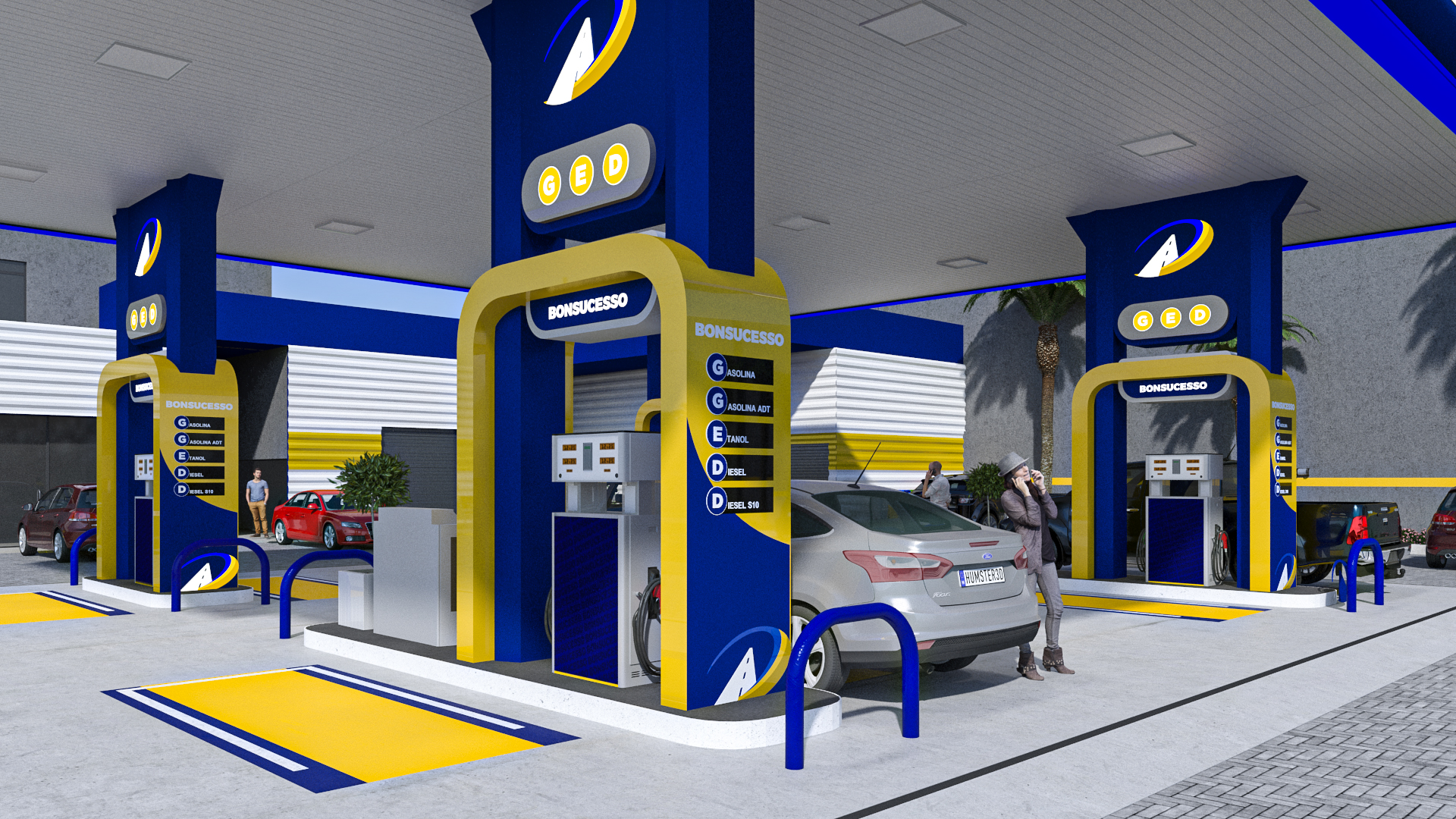
Summary: a pump topper, also called a dispenser topper or pump communicator, is the sign mounted on or above the fuel dispenser. It tells drivers which fuels that pump sells and can carry prices, promotions and the station brand. The common formats are front-mounted, flag and column toppers. From cheapest to most expensive, the usual builds are a flat plate, a printed graphic in an aluminum or ACM frame, a lit box with an acrylic face and a digital screen. Before you order, check your sign code, keep the FTC octane label and any EPA E15 label in full view, and use a UL-listed sign if the topper is lit.
The pump topper is the one sign the driver has in front of them for the whole fill-up. It names the fuels, finishes the fuel island and turns the dispenser into a point of sale for the store. Below: formats, materials and relative cost, what to say, and the U.S. rules to check first.
Why the pump is worth a sign
NACS research shows how much the forecourt matters for in-store sales. In the 2025 NACS Convenience Voices survey, 23.8% of shoppers said they typically buy only fuel on their visit, mostly because they only needed fuel (63.6%) or were in a hurry (30.8%). Asked what might have brought them inside, 17.8% named better signage or promotions outside, 17.1% a loyalty or rewards program and 16.6% more visible products. NACS’s conclusion: communicating the inside offer at the pumps could be a key lever to bring those customers into the store.
The other side: in the 2025 NACS Consumer Fuels Survey, a record 64% of drivers who filled up said they also went inside. The topper talks to both groups while the nozzle runs.
Pump topper formats
| Format | Where it sits | Best use |
|---|---|---|
| Front-mounted | At the entrance end of the fuel island | Announces the fuels as the driver pulls in, with clear and visible guidance |
| Flag type | Mounted above the dispenser like a flag | The most traditional format; used for advertising, brand presence and to highlight premium or additive-enhanced fuel |
| Column type | Built into the canopy column at the island | Heavy-vehicle and truck lanes, where its height is easy to see; smaller, so it is a low-cost option |
A topper can also carry store ads, LED price panels or the station brand, be attached to an oil or service cabinet, and help organize traffic on the forecourt. On stations without room for a price sign, it can work as the price panel.
Materials and relative cost
| Type | How it is built | Relative cost | Notes |
|---|---|---|---|
| Flat plate | Single printed panel (PVC or similar) fixed to the dispenser | Lowest | Low visual quality; not recommended if you are investing in your station’s image |
| Printed graphic in an aluminum or ACM frame | Metal frame with a printed face that is easy to swap for each promotion | Low | The most common choice. One published reference: the TOP TIER Retailer Store lists a 20 in x 12 in aluminum topper frame from $140, with graphics sold separately and two required per hardware order |
| Lit box with acrylic face | Aluminum cabinet with internal LED lighting behind an acrylic face | Medium | A more premium look that reads at night; needs power at the island and a UL-listed sign |
| Digital screen | LED or LCD screen showing video and offers that change through the day | High, per pump | Content can change by daypart; ask your AHJ how your sign code treats screens and moving images |
What moves a topper budget up or down:
- Count: dispensers times the faces you dress; double-sided toppers double the graphics.
- Size and shape: a standard frame versus a custom shape, such as a topper that runs from the ground to the top of the column.
- Light: unlit, internally lit or digital; lit units need power and electrical work at the island.
- Graphic changes: how often you swap promotions.
- Mounting: dispenser, column or cabinet. Ask your dispenser service company how a topper can be fixed to your model.
What to put on a pump topper
Keep one message per face, large enough to read from the driver’s seat, and point to something the driver can buy today. Content that tends to work:
- Premium fuel: a premium or additive-enhanced gasoline offer of the day.
- A store bundle: coffee plus a snack at one price. In the same NACS survey, asked what would make them more likely to shop inside, customers named a bundled food and beverage offer (21.5%) and a better coffee selection (16.1%).
- Loyalty sign-up: “Join and earn points on this fill-up.” See loyalty programs for gas stations.
- Services: car wash, air, oil change or anything else you sell beyond fuel.
Branded stations: what the supplier controls
If you fly a fuel brand, the supplier’s image program sets the dispenser graphics, and you need its approval before you add your own messages to the topper. Ask which areas the program keeps for the fuel brand and which, if any, you can use for store promotions, then design the topper together with the rest of the forecourt image. Unbranded stations set their own rules; see brand identity for independent gas stations.
U.S. checks before you order
- Sign permit: rules vary by city. Rome, New York, exempts signs on gas station pumps that advertise products or services available on site, limited to 2 sq ft and one per pump station. Lawrence, Kansas, defines a “fuel pump topper sign” (a small sign on top of the dispenser, not meant to be legible from the public right-of-way) and exempts it from the sign permit. Other codes may count toppers toward your total sign area, so ask your AHJ.
- Octane label: the FTC Fuel Rating Rule requires at least one octane label on each dispenser face, as near as possible to the price per unit and in full view of consumers. A topper, decal or frame must not hide it.
- E15 label: if you sell E15, EPA requires a label positioned to clearly identify the control the customer uses to select E15 (40 CFR 1090.1510).
- Electrical: electric signs are installed under Article 600 of NFPA 70 (NEC) and built to UL 48, the product safety standard for electric signs. The NEC also treats the area around a dispenser as a hazardous (classified) location under Article 514, where wiring and equipment must use identified methods. Use a licensed electrician and pull the electrical permit.
Not to be confused: the communicator in fuel automation
In fuel automation, “communicator” can also mean the interface that links the dispenser to the POS or forecourt controller, sending volume, sale amount and fuel grade in real time. It is not a sign, but accurate data avoids cash differences, speeds up service, ties sales to tank inventory and helps make sure the volume dispensed matches what was paid. Before buying one, check compatibility with your dispenser and POS, the speed and accuracy of data transmission, warranty and support, ease of maintenance and room for upgrades. Confirm compatibility with both the dispenser manufacturer and the automation supplier, and budget for installation, setup and preventive maintenance.
Real pump topper projects
- Checkout, Dallas, Texas: pump toppers designed to be intuitive, in a 3D project with the canopy fascia, price sign and store facade, plus design specifications so the sign company could reproduce every element.
- Rede Macedo, Paraná, Brazil: stylized pump toppers from the ground to the top of the columns, with LED price panels on each dispenser, across the whole network.
- Joia do Tronco, São Paulo, Brazil: red pump toppers with white ACM column cladding and colorful signs for the fuel types.
Scope and links are in our gas station case studies.
FAQ
Is a pump topper the same as a pump communicator?
Yes, as a sign. U.S. buyers usually say pump topper or dispenser topper; “pump communicator” translates the term used in Brazil, where Petrol is based. In fuel automation, “communicator” also names the interface that connects the dispenser to the POS.
Do pump toppers need a sign permit?
It depends on your city. Some codes exempt small pump signs, as Rome, NY, and Lawrence, KS, do; others count them in your sign area. Ask your AHJ before fabrication, and pull an electrical permit if the topper is lit.
Can a pump topper cover the octane label?
No. The FTC requires the octane label on each dispenser face, in full view of consumers and as near as possible to the price per unit. Design the topper and any dispenser graphics around it.
Which pump topper gives the best value?
For most stations, a printed graphic in an aluminum or ACM frame: it costs little and the art can change with every promotion. A lit acrylic box gives more image at night, and a digital screen makes sense when promotions change often.
Can Petrol design pump toppers for a U.S. station?
Yes. We design the toppers in 3D together with the canopy fascia, columns and price sign, and deliver design specifications your local sign company can bid, fabricate and install. If you are changing more than the toppers, start with our independent gas station reimage checklist.
Sources (accessed November 2026): NACS Magazine, “Attracting Fuel-Only Customers Into the Store” (March 2026), 2025 NACS Convenience Voices survey; Bold Decision, “Shopper Behavior Revealed: From Pump to Store,” 2025 NACS Consumer Fuels Survey (first published in NACS Magazine, October 2025); TOP TIER Retailer Store, pump topper frame 20 in x 12 in; Rome, NY, City Code Sec. 80-16.7(b)(iii); Lawrence, KS, Sign Code, Ordinance No. 9391 (2017), Sec. 5-1803 and 5-1812, as amended by Ordinance No. 9439 (2018); FTC, Complying with the FTC Fuel Rating Rule; 40 CFR 1090.1510, E15 labeling; International Sign Association, UL 48 standard; IAEI Magazine, “Hazardous (Classified) Locations, NEC Articles 500 through 517” (Nov 2014); Petrol GROUP project pages linked above. Sign codes change: confirm the current rules with your AHJ.
Planning new pump toppers or a forecourt refresh? Request a quote and send photos of your dispensers, the number of fueling positions and whether your station is branded.