




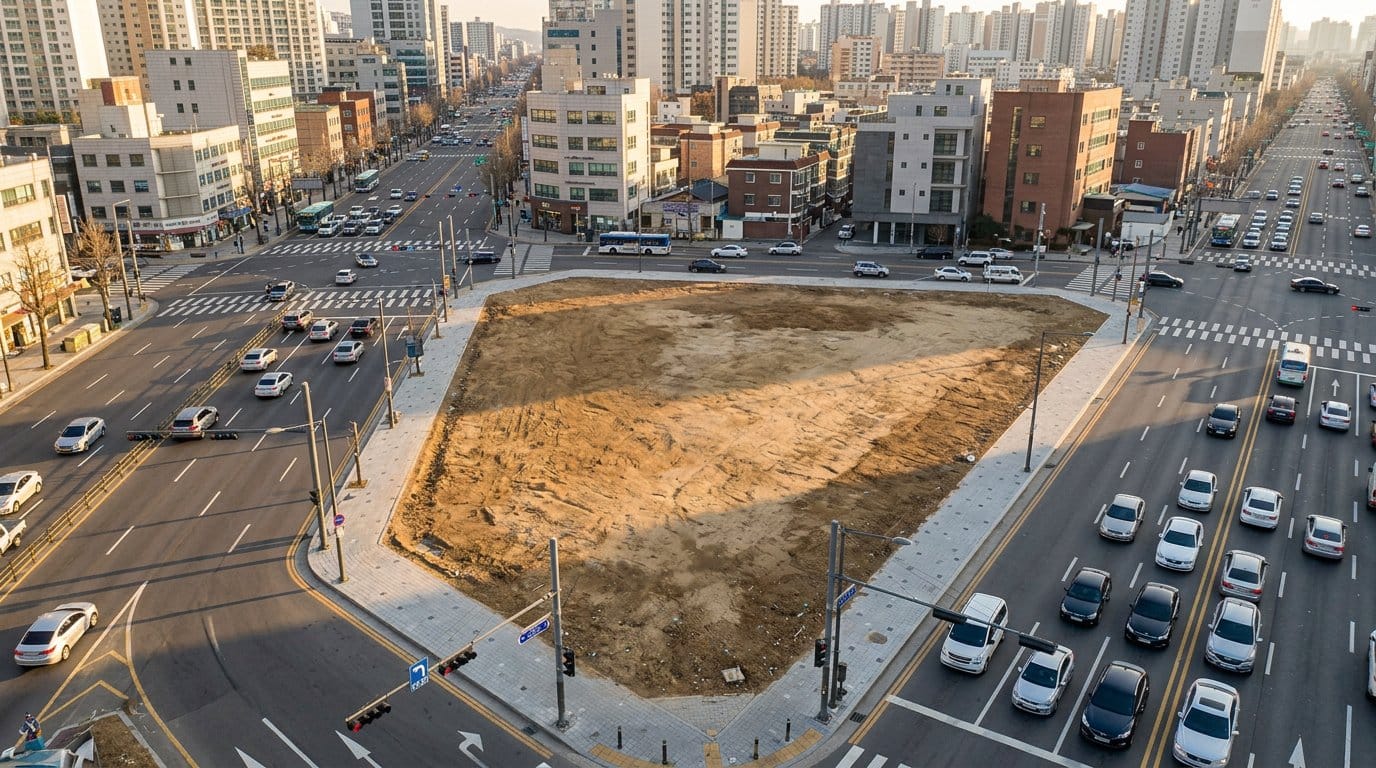
Buying the wrong site for a gas station is a mistake that is hard to undo. A site location analysis is the study that separates a promising site from a problem site, and it should be done before any financial commitment.
The 8 factors of a site location analysis
1. Traffic count — don’t trust “it looks busy.” Commission an automated traffic count over 7 days: it costs little compared with buying a site whose traffic turns out to be imaginary. 2. Road speed — roads with a speed limit above 60 km/h (about 37 mph) get fewer impulse stops. 3. Visibility — can the site be seen from at least 150 meters (about 500 feet) away in both directions? 4. Entry and exit — how many driveways are possible? Can customers get in and out without making a U-turn? 5. Competition within 2 km (about 1.2 miles) — how many stations? Which brands? What is the estimated volume of each one? 6. Socioeconomic profile of the area — average income, density of commercial fleets, seasonality. 7. Environmental restrictions — is the site in or near a wetland, a floodplain, a drinking-water source protection area or another protected area? A preliminary check with the city or county planning office and your state environmental agency saves months of frustration. 8. Utilities — is adequate electrical service (three-phase power) available? Public water? A sewer line nearby?
How to estimate a site’s potential volume
The basic industry formula: estimated volume per month = daily traffic × 30 × stop rate × average gallons per fill-up. Typical stop rate: 0.8–1.5% of traffic. Average fill-up: about 10–16 gallons (40–60 liters) for cars and about 40–80 gallons (150–300 liters) for trucks. Example: 5,000 vehicles/day × 30 × 1% × 13.2 gallons (50 liters) = about 19,800 gallons (75,000 liters) per month. Multiply by the expected gross margin per gallon to estimate the potential fuel gross profit, the starting point for an EBITDA estimate.
FAQ
Do I need a geologist or environmental consultant to check the soil before buying the land?
If the site has an industrial history or contamination is suspected, yes. In the U.S., the process usually starts with a Phase I Environmental Site Assessment (a records review and site visit under the ASTM E1527-21 standard, which EPA accepts for its All Appropriate Inquiries rule) and, if it finds signs of contamination, a Phase II with soil and groundwater sampling. It may be required anyway, so it is better to do it before you buy.
Can I build a gas station on a corner lot?
Yes, and corners are usually worth more because of their double visibility. But check the turning radius trucks need to get in: tight corners can rule out access for heavy vehicles.
Learn about our full gas station design service. See also: gas station project checklist.