




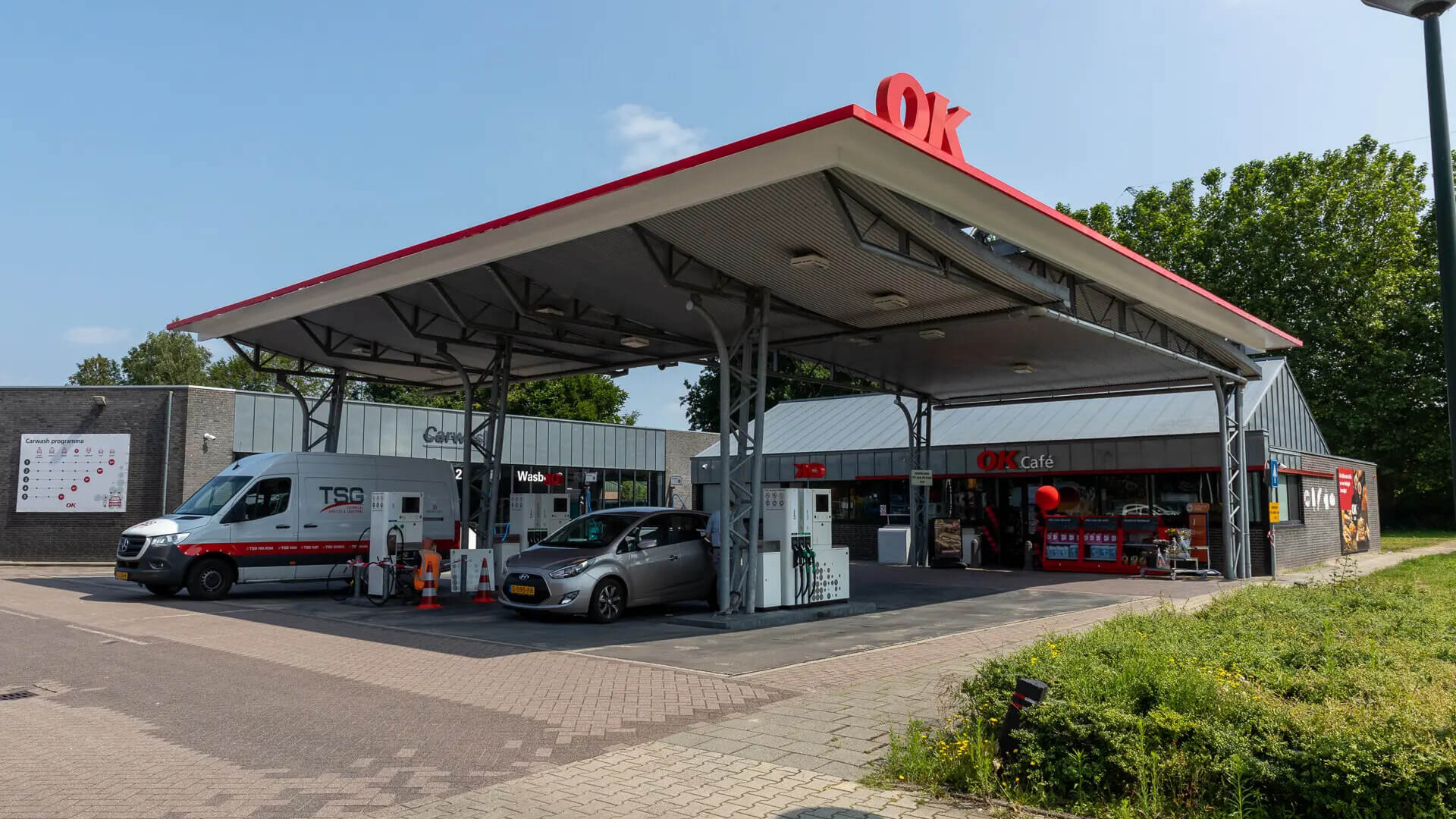
Steel structure is the dominant construction option for gas station canopies — but the choice between a steel frame, an H-column system (rolled beams), round tubular or a special profile has significant implications for cost, schedule and durability. Petrol Group has specified and followed steel structures for gas stations for 29 years.
Why do most gas stations use steel structure?
The canopy is the most visible and functional element of a gas station project. Steel structure dominates because: assembly time is 60–70% shorter than concrete, it allows clear spans of 18–30 meters (about 59–98 ft) with no intermediate columns (essential for the forecourt), it is easier to adapt for future expansions, and it offers a better cost-benefit ratio for canopies between roughly 200 and 2,000 m² (about 2,150–21,500 sq ft).
Types of steel structure for gas stations
Rolled I-profile (H) — the historic standard. Robust, easy to calculate and build. Ideal for conventional canopies. Tubular truss — allows canopies with a stronger look and longer spans. More expensive but visually more elegant. Used in premium branding projects. Steel frame + insulated panel roofing — for convenience stores and enclosed areas. More economical than masonry for non-permanent structures. Arched structure — rare at gas stations but used in distinctive architectural concepts with a curved canopy.
Technical specifications that matter
Sizing the steel structure must consider: wind (and snow and seismic loads where they apply, as required by the building code adopted in your jurisdiction), maintenance loads (gutter, light fixtures, signage), correct anchoring at the columns (high-strength bolts or anchor bolts) and anticorrosive paint suited to the environment — stations near the coast need a different specification from inland stations. The structural design must be signed by an engineer licensed in your state, and the architecture project defines all of these specifications.
What drives the cost of a steel structure
The structure plus roofing is usually priced per square foot installed, excluding foundations. The biggest variable is the price of steel — check an updated quote before closing a budget, because steel can swing by up to 20% a year. Span, wind and snow loads, the type of roofing and site access also move the number significantly, so always compare quotes based on the same specification.
Frequently asked questions
Does a steel structure need specific maintenance?
Yes. An annual inspection of the anticorrosive paint, touch-up of rusted spots and a check of bolts and connections. Neglecting maintenance can cut the service life from 30 years to under 15.
What is the service life of a gas station steel structure?
With correct specification and proper maintenance: 30–40 years. Most gas station renovations replace the roofing and signage long before the structure needs to be replaced.
Learn about our design and specification service for gas station steel structures: our service. See also: gas station canopies.