




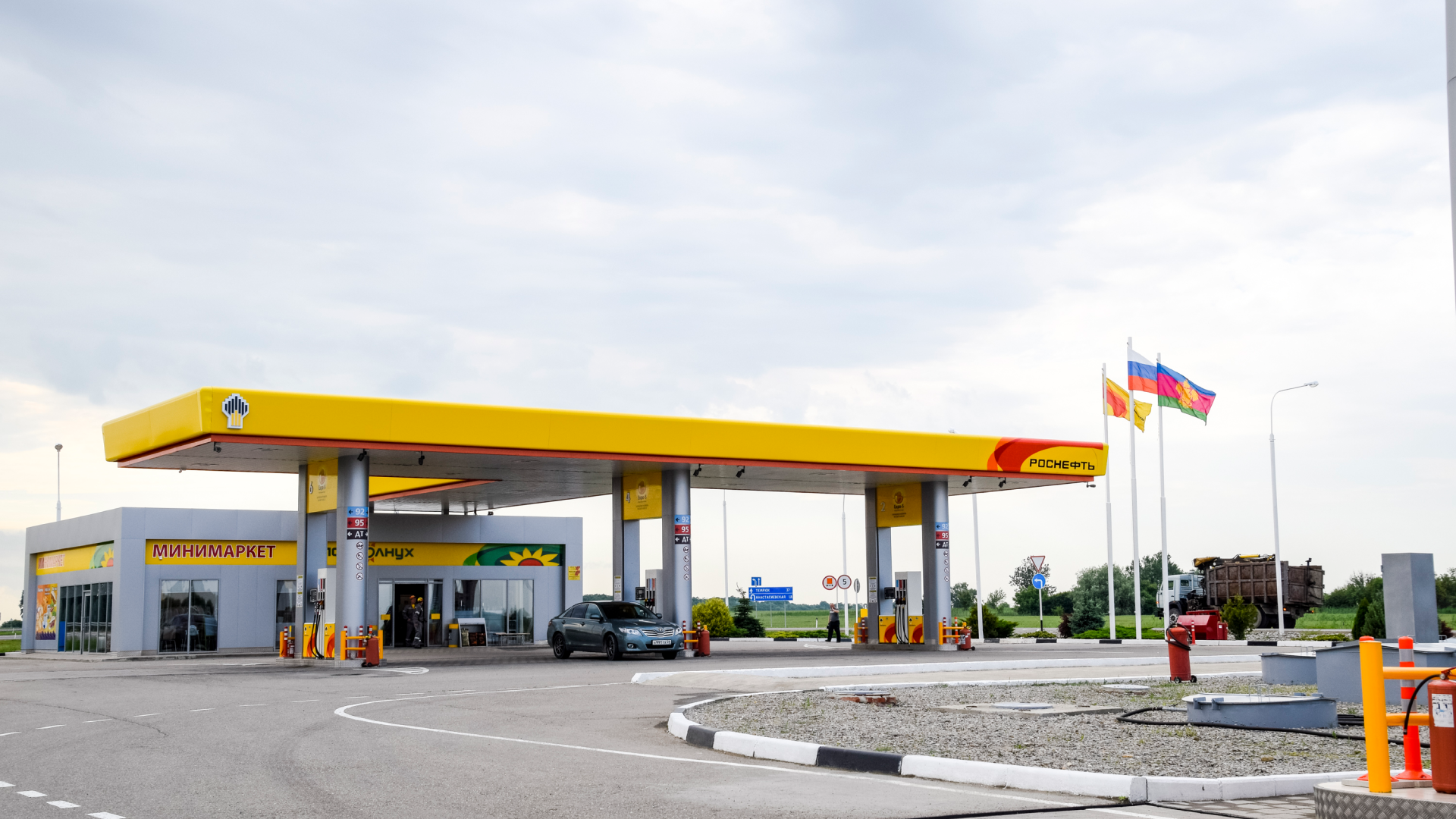
Deciding whether to put a fuel brand on your canopy or operate as an unbranded station is one of the most strategic decisions an owner makes. There is no right answer for everyone: the right choice depends on location, available capital, customer profile and long-term goals. Petrol Group has helped hundreds of stations with this decision. These are the criteria that really matter.
The main fuel brand options in the U.S.
Major refiner brands — names such as Shell, Chevron and Texaco, ExxonMobil (Exxon and Mobil), BP and Amoco, Marathon and ARCO, Phillips 66, Conoco and 76, Sunoco, Valero and Citgo. They bring national recognition, a loyalty program, card acceptance and a ready-made image standard that you must follow. In most cases you do not sign with the oil company itself but with a branded distributor (a jobber or wholesaler) that supplies that brand in your area. Regional brands — brands with a strong footprint in one part of the country, such as Sinclair or Gulf: terms vary, recognition is high at home and low elsewhere. Unbranded (independent) — you buy fuel from any supplier on the open market, pay no brand fees and have no image obligations; the station carries your own brand.
Pros and cons of each option
| Option | Advantages | Disadvantages |
|---|---|---|
| Major brand | Recognized brand, loyalty program, card and marketing support, ready-made image standards | Supply tied to the brand or its distributor, cost of the image program and future reimages, volume commitments, costs if you leave early |
| Regional brand | More flexible terms, regional support | Less brand recognition outside its region, supply depends on a smaller network |
| Unbranded | Freedom to choose suppliers, no brand fees, potential for higher margins, your own brand identity | No brand pull, you fund your own marketing and loyalty, some drivers prefer a brand they know |
What does a fuel brand require in terms of design?
When you sign a branded supply agreement, the station commits to implementing the brand’s image standards — the facade, the pylon sign, the canopy fascia, the pump toppers and the forecourt signage in the brand’s colors and typefaces — and usually to reimaging when the brand updates its look. Get the image manual before you sign and price it. Brand signage still needs a local sign permit, and your city’s sign code can limit what the manual shows. Petrol Group designs station brand identity within the image manuals of major brands, ready for the brand’s review. See an example in the project for Posto Paraíso, an Ipiranga-branded station in Fortaleza, Brazil.
What U.S. law says about branded supply agreements
The federal Petroleum Marketing Practices Act (PMPA, 15 U.S.C. 2801 et seq.) protects motor fuel franchisees: the brand or distributor may terminate or refuse to renew only on the grounds listed in the Act and, as a rule, with at least 90 days’ written notice (15 U.S.C. 2804). The FTC Franchise Rule (16 CFR Part 436) excludes from “required payment” reasonable amounts of inventory bought at bona fide wholesale prices, so a fuel-only deal may not come with a Franchise Disclosure Document. Some states have their own franchise and dealer laws: have a franchise attorney licensed in your state read the agreement.
When does going unbranded make more sense?
Unbranded has a clear advantage at stations with a prime location, where traffic is guaranteed regardless of the brand; at stations focused on commercial fleets (a fleet buyer cares about price, credit and card acceptance, not the brand on the canopy); and in regions where no brand offers reliable supply. See also our article on rebranding a gas station for a detailed analysis.
What Petrol Group handles in the design
Branded or not, we design the image: the facade, canopy fascia, pylon sign, pump toppers and forecourt signage following the brand’s manual, or a complete brand identity of your own. We deliver 3D renderings to compare options before you sign, construction documents and editable artwork, working remotely. A locally licensed architect or engineer of record signs and files the project with the authority having jurisdiction; your local sign company fabricates and installs.
FAQ
Does a branded supply agreement have a minimum term?
The term is set by the agreement itself, not by federal law. What the PMPA regulates is how the brand or distributor can end it or decline to renew it, including at least 90 days’ written notice in most cases. Leaving early can mean repaying incentives or image funding, so read those clauses with an attorney before you sign.
Can I switch brands without renovating the station?
No. Switching brands means implementing the new brand’s image: new canopy fascia, pylon sign, pump toppers and facade elements, plus new sign permits where your city requires them. Price the image work before deciding to switch. If the change involves construction, plan it together with the gas station renovation.
Will the brand give me a Franchise Disclosure Document?
Only if the deal meets the FTC Franchise Rule’s definition of a franchise. When it does, the disclosure document must reach you at least 14 calendar days before you sign or pay anything.
Petrol Group works with the image manuals of the major brands. Learn about our complete rebranding service — design, 3D renderings and artwork ready for the brand’s approval.