





There is no single price tag for a gas station convenience store. The startup cost is the sum of eight buckets (building and finishes, fixtures, refrigeration, foodservice equipment, POS and systems, opening inventory, licenses and permits, and working capital). The most solid public benchmark comes from NACS: the average c-store remodel cost $707,179 in 2023, according to NACS Magazine (May 2025), citing the NACS State of the Industry Report of 2023 data. A ground-up store costs more, and the only reliable number for your site is a contractor bid on a finished design.
This guide shows what drives each bucket, which numbers have a primary source, and how to build your own budget with stated assumptions. Where no trustworthy public figure exists (gondola, walk-in cooler or oven prices), we explain how to get comparable quotes instead of inventing a range.
What the industry numbers say in 2026
Before the budget, the context. In its April 15, 2026 release, NACS reported:
| Metric (2025) | Value |
|---|---|
| U.S. convenience stores | 151,975 (down 280, or 0.2%) |
| In-store sales (foodservice and merchandise) | $341.2 billion, up 1.7% over 2024 |
| Foodservice share of in-store sales | 28.5% |
| Foodservice share of in-store gross profit dollars | 38.9% |
| Average hourly wage, store-level associates | $15.04 |
| Transactions per store per month | 45,160 |
| Card fees paid by the industry | record $21.3 billion |
| Direct store operating expenses | up 4.2% |
Two takeaways for a startup budget. Foodservice brings in a larger share of gross profit than of sales, so the kitchen and coffee equipment is where many operators decide to spend. And labor and card fees are recurring costs, so they belong in working capital, not only in the pro forma.
The eight buckets of a c-store budget
| Bucket | What it includes | What drives the cost | Where the number comes from |
|---|---|---|---|
| 1. Building and finishes | Ground-up shell or remodel, floors, ceilings, restrooms, MEP | Square footage, new build vs. remodel, finish level, site work | General contractor bids on a finished design |
| 2. Fixtures and gondolas | Gondolas, endcaps, checkout counter, coffee bar, millwork | Linear feet of shelving, share of custom millwork | Quotes against a fixture detail package |
| 3. Refrigeration | Walk-in cooler with glass doors, reach-ins, freezers, HVAC load | Number of cooler doors, walk-in vs. self-contained units | Equipment and installer quotes |
| 4. Foodservice equipment | Coffee, ovens, roller grills, warmers, hand sinks, hood | Menu: packaged only, heat-and-serve, or made to order | Quotes; local health code requirements |
| 5. POS and systems | Registers, scanners, age verification, EBT, cameras, network | Checkout lanes at peak, integration with fuel controllers | Vendor quotes plus monthly fees |
| 6. Opening inventory | First full fill of the planogram | Projected sales, margin, days of cover, SNAP rules | Formula with stated assumptions (below) |
| 7. Licenses and permits | Building, health, tobacco, alcohol, lottery, sales tax | State and local rules, foodservice scope | Your city, county and state fee schedules |
| 8. Working capital | Payroll, utilities, software, card fees until the store breaks even | Monthly fixed costs and ramp-up time | Formula with stated assumptions (below) |
Most budgets that go wrong cover buckets 1 to 3, which show up during construction, and underfund 6 and 8, which show up in the bank account after opening day.
Building and finishes
NACS does not publish a free, current average for ground-up c-store construction per square foot, and cost-book models age fast. Use the remodel benchmark above as a sanity check, and price your own building with bids. NACS Magazine also reported that the remodel interval fell from 12.6 to 11.6 years and that 30.8% of stores had been remodeled in the previous five years. Expect to budget for a remodel again within the life of the site.
Ask every general contractor to price the same drawings and to break out:
- site work, utilities and the connection to the forecourt;
- foundation and building shell;
- interior finishes, restrooms and storage;
- mechanical, electrical and plumbing, including dedicated circuits for refrigeration;
- HVAC sized for the heat that self-contained coolers and ovens add to the sales floor;
- general conditions, overhead and profit, shown as a separate line.
Accessibility is part of the building cost, not an extra. Under the 2010 ADA Standards for Accessible Design, section 904.4.1, a sales counter needs a portion at least 36 inches long and no higher than 36 inches above the finish floor for a parallel approach. Section 904.4.2 allows 30 inches of length, also at 36 inches maximum, with knee and toe clearance for a forward approach. Design the checkout that way from the start and you avoid rebuilding millwork after an inspection.
Fixtures and gondolas
Fixture cost comes down to three design decisions: how many linear feet of gondola, how much of the store is custom millwork, and how many checkout positions. Standard gondola runs are cheaper and ship faster. Coffee bars, checkout islands and branded wall features are usually custom.
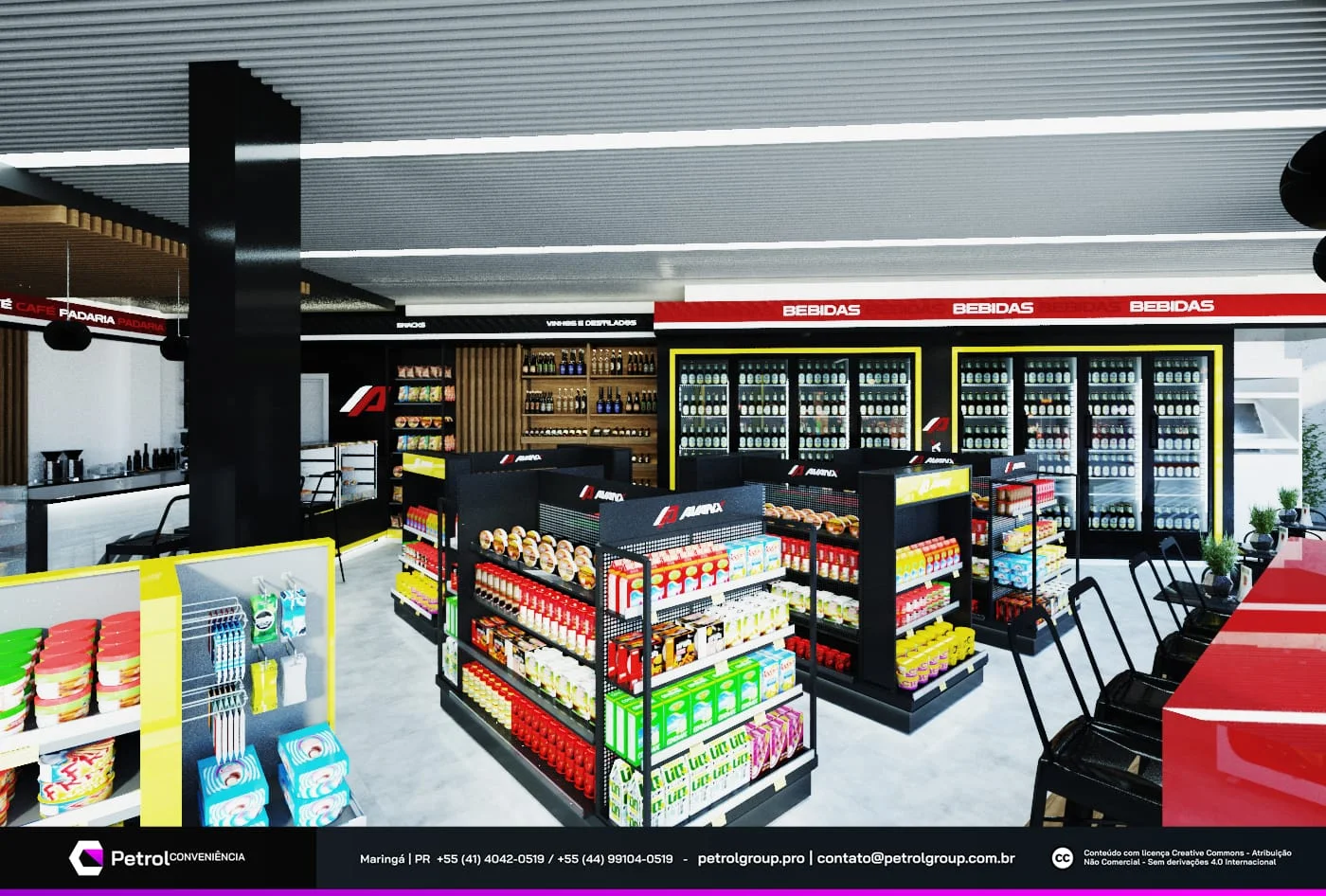
To compare suppliers, they all need to price the same thing. That is the job of a furniture and fixture detail package: dimensions, materials, hardware and finishes for each piece. For the Avanx convenience store (Três Poderes unit, Bahia, Brazil), the project page lists furniture detailing, a descriptive memorandum and an electrical and plumbing points plan among the deliverables.
Checklist for this bucket:
- linear feet of gondola per category, with height and shelf count;
- endcaps and impulse displays near the register;
- a checkout counter with secure space for tobacco, lottery and high-theft items;
- coffee and foodservice counters drawn around the actual equipment footprints;
- seating, if the store will offer on-site dining.
Refrigeration: walk-in cooler, reach-ins and HVAC
Refrigeration is usually the largest equipment line and the largest utility line after opening. There are two main routes:
- Walk-in cooler with glass doors: product is loaded from behind, the front stays full and the condensing unit sits outside. It needs construction work (panels, floor, drain, dedicated power) and design coordination.
- Self-contained reach-ins: plug-in glass-door merchandisers. Installation is simple, but every unit dumps heat into the sales floor, and the HVAC has to remove it.
If a beverage, ice or ice cream supplier offers to place a cooler in your store, read the agreement before you count it as free. Check who owns it, who pays for service and power, and whether it can hold only that supplier’s products.
What sets the price of this bucket:
- number of cooler and freezer doors (cold beverages, dairy, frozen);
- walk-in versus self-contained units;
- ice merchandisers and ice cream cases;
- HVAC tonnage sized for the real heat load.
Foodservice equipment: the bucket that changes your permits
Coffee, roller grills or made-to-order food change the budget twice: once for equipment and once for health requirements. The FDA Food Code is a model code; FDA has issued the 2026 edition, and state and local regulators use the Food Code as the model for their own retail food rules. That means your health department, not a federal agency, sets the permit, the plan review and the inspection.
Decide the menu before the floor plan. Selling packaged food only is one scope. Heating frozen items is another. Assembling sandwiches needs prep counters, hand sinks, cold holding and often a hood. Each step adds equipment, plumbing and time with the health department.
POS and systems
Size checkout lanes for the peak, not the daily average. A highway store fills up when a bus stops; a commuter store fills up at 5 p.m. The industry averaged 45,160 transactions per store per month in 2025, per NACS, and your own traffic study should tell you how many of those land in your busiest hour.
- registers, scanners and receipt printers;
- back-office software for inventory, pricing and reporting;
- age verification at the register: federal law sets 21 as the minimum age for tobacco sales, and since September 30, 2024 retailers must check photo ID for anyone under 30 (FDA, Tobacco 21);
- EBT acceptance if you will be a SNAP retailer;
- payment processing, with fees that belong in monthly costs;
- security cameras, network and backup power;
- integration with the fuel controller if customers pay for fuel and merchandise at one register.
Opening inventory: the formula with stated assumptions
There is no free, current public benchmark for opening inventory in a fuel-site c-store. The honest method is to start from your sales forecast:
Opening inventory = projected monthly in-store sales × (1 − gross margin) × days of cover ÷ 30
Example with stated assumptions (not industry averages): $100,000 in projected monthly in-store sales and a 35% blended gross margin, so cost of goods is 65% of sales.
| Days of cover | Math | Opening inventory |
|---|---|---|
| 14 days | 100,000 × 0.65 × 14 ÷ 30 | $30,333 |
| 21 days | 100,000 × 0.65 × 21 ÷ 30 | $45,500 |
| 30 days | 100,000 × 0.65 × 30 ÷ 30 | $65,000 |
Run the math by category, because tobacco, packaged beverages and foodservice carry very different margins. If you plan to accept SNAP, check the new stocking rule first. The USDA final rule scheduled for publication on May 8, 2026 raises the minimum from three to seven varieties in each of the four staple food categories. It also requires perishable varieties in three categories instead of two and gives retailers 180 days to comply. That is a few more SKUs of dairy, grains, protein and produce in your opening order. Our list of products for convenience stores covers the rest of the mix.
Licenses and permits
Permits are local, and fees vary by city, county and state, so we do not quote amounts. A typical fuel-site c-store needs:
- building permit and certificate of occupancy for new construction or a remodel;
- retail food or health permit, often with plan review when there is food preparation;
- state tobacco retail license where the state requires one, plus federal Tobacco 21 compliance;
- alcohol license from the state or local alcohol beverage control agency, if you sell beer or wine;
- lottery retailer agreement with the state lottery, if offered;
- sales tax permit and local business license;
- SNAP retailer authorization from USDA, if you will accept EBT.
The fees themselves tend to weigh less than the timeline. Every month a finished store sits closed waiting for a permit burns working capital with no sales.
Labor and working capital
Payroll is the largest fixed cost of a 24/7 store, and the minimum staffing math is simple. A register open around the clock needs 168 hours per week; at 40 hours per person, that is 4.2 full-time employees per position before vacations and call-outs. At the 2025 NACS average of $15.04 per hour, one 24/7 position costs 168 × $15.04 = $2,526.72 per week, or about $10,949 per month, before employer payroll taxes, workers’ compensation and benefits.
Working capital = (monthly fixed costs − monthly gross profit) × months to break even + opening inventory + receivables
- Monthly fixed costs: payroll, utilities, software, card fees, insurance, rent or the share of site costs.
- Gross profit: sales × margin. Sales usually start below target; model a conservative ramp-up.
- Months to break even: the SBA tells new owners to count at least one year of monthly expenses in their startup cost estimate.
If the store shares staff and utilities with the fuel side, split those costs from day one. Otherwise the store looks profitable because the forecourt is paying its bills.
A budget template for your c-store
Use this table as your spreadsheet. Lines with a public source are filled in; the rest need quotes against your design.
| Line | How to estimate it | Starting point |
|---|---|---|
| Building and finishes | GC bid per sq ft × your square footage, plus site work | Bids; sanity check vs. $707,179 average remodel (2023 data) |
| Design and engineering | Architecture, MEP, permitting drawings | Proposals |
| Fixtures and gondolas | Fixture detail package × 3 suppliers | Quotes |
| Refrigeration and HVAC | Door count and walk-in × 3 suppliers, minus supplier-placed units | Quotes |
| Foodservice equipment | Menu equipment list plus health code items | Quotes |
| POS and systems | Lanes × hardware kit, plus setup and monthly fees | Quotes |
| Opening inventory | Formula with your assumptions | $45,500 in the 21-day example |
| Licenses and permits | Local fee schedules | City, county, state |
| Working capital | Formula above × months to break even | One 24/7 position: about $10,949/month in wages |
To place the store inside the total site investment, see our guide on how much a gas station costs. For the design fee side, read convenience store design cost in the USA.
Where c-store budgets blow up
- Buying equipment before the layout. The walk-in and the reach-ins define walls, circuits and drains. Buying first means cutting slabs and pulling new wire later.
- Power and plumbing in the wrong place. An electrical and plumbing points plan locates every outlet, circuit, water line and drain before construction.
- Improvised lighting. Dark aisles hurt sales and lead to fixture swaps; a lighting design solves that on paper.
- An oversized opening order. Cash tied up in slow movers is cash you will miss for payroll in month two.
- Late permit applications. A finished, closed store is the most expensive line in the budget.
- 24/7 hours without a staffing plan. Overnight service needs four or more people per register position.
How Petrol Group fits into the budget
Petrol Group has worked only with fuel stations for 29 years, with more than 983 projects delivered in 16 countries, serving Brazil, the U.S. and Latin America. Our convenience store design service delivers a convenience store project that turns the budget into a list contractors can price: layout, fixture detailing, electrical and plumbing points, lighting and visual identity.
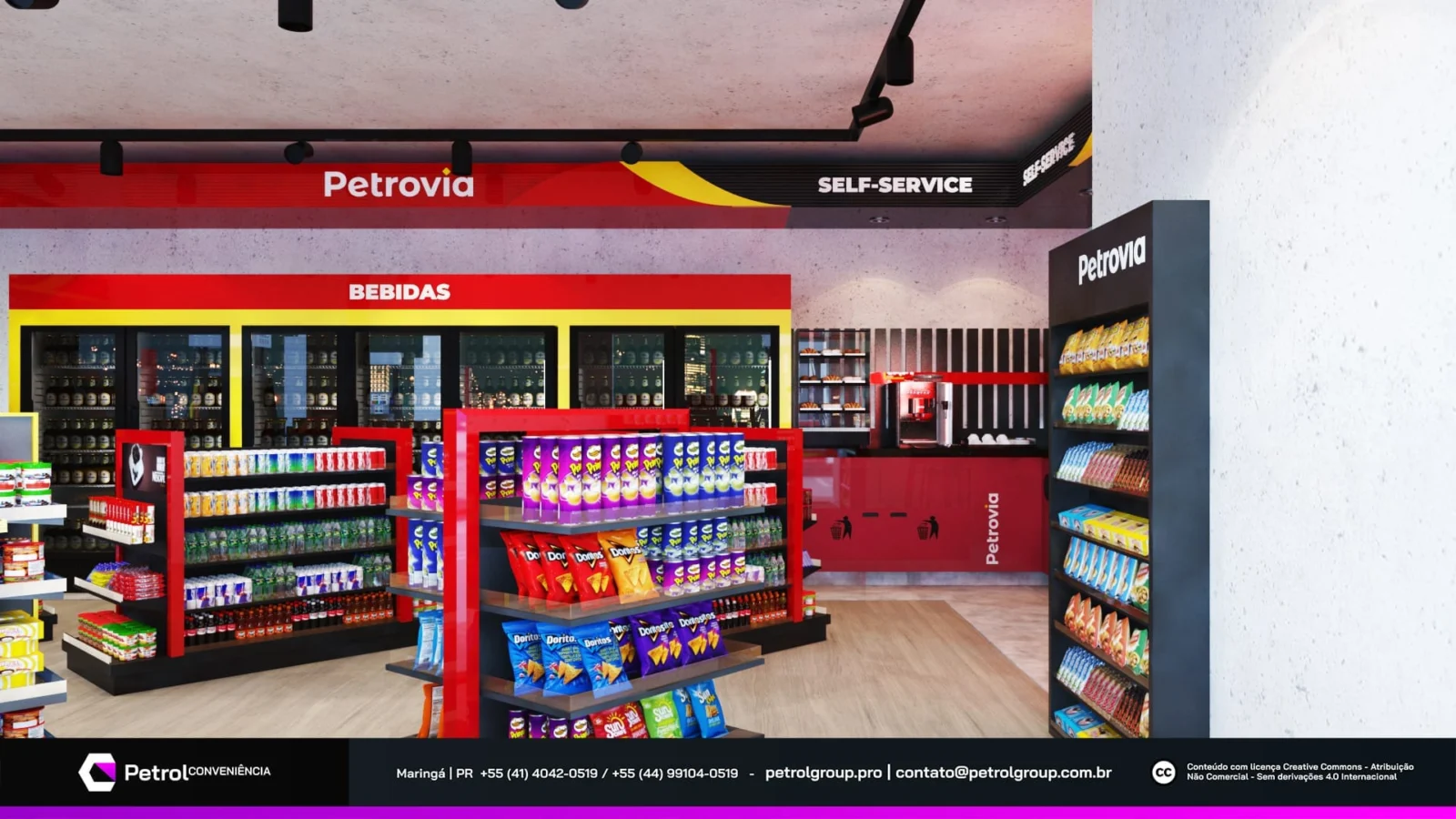
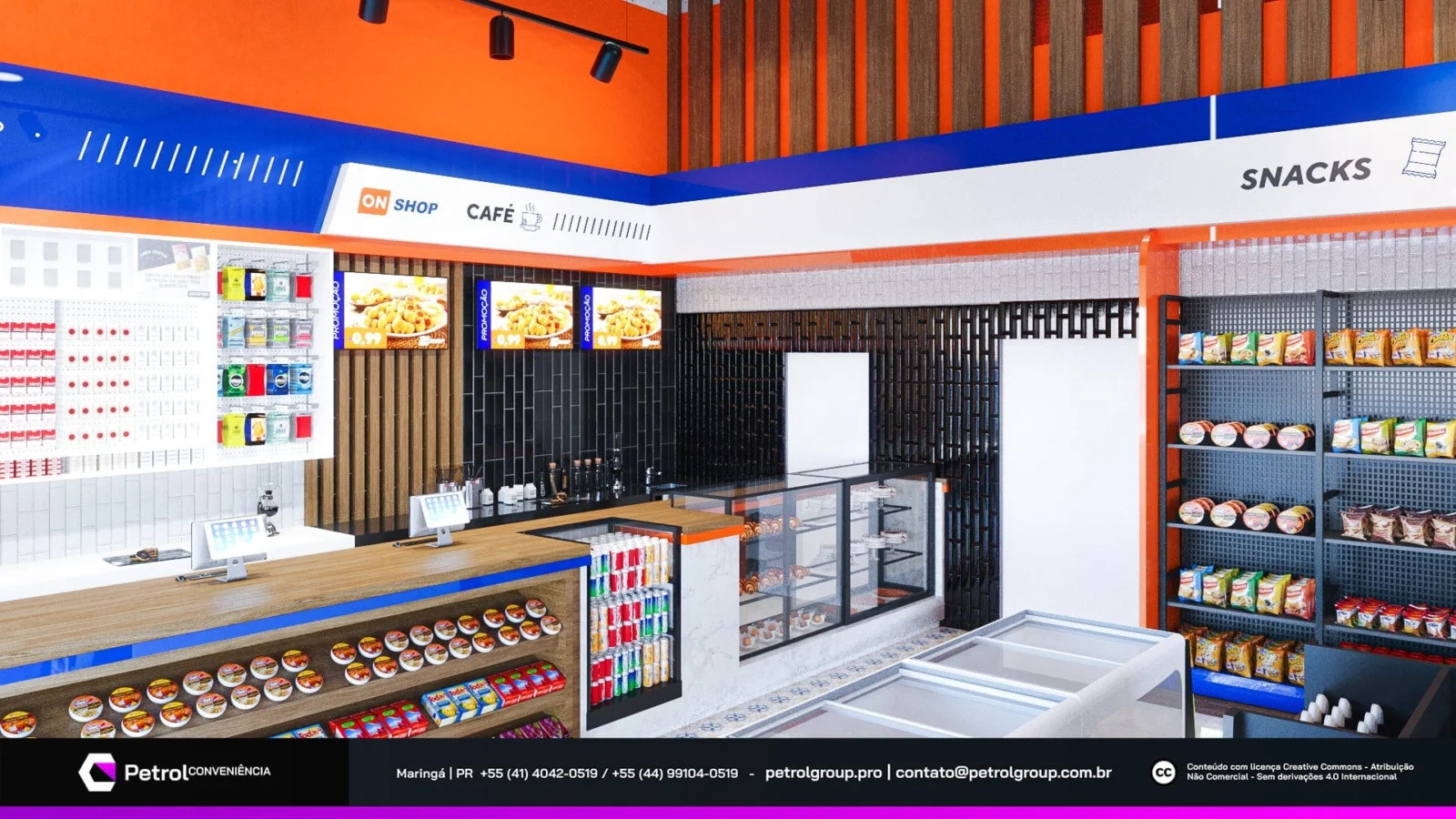
Three examples from the portfolio. The first is the Petrovia gas station convenience store in Salto, São Paulo. The second is On Shop BR 277 in São José dos Pinhais, Paraná, whose page lists visual identity, construction documents and 2D renderings. The third is the Avanx store mentioned above. More work is in the portfolio.
Petrol Group does not publish prices for its own services; each proposal depends on square footage, scope and what already exists on the site. To test feasibility, merchandise mix and payback before you commit, talk to our consulting team.
Frequently asked questions
How much does it cost to open a convenience store at a gas station?
It depends on square footage, ground-up versus remodel, foodservice scope and local permit rules. The best public benchmark is the NACS figure for an average remodel: $707,179 in 2023 data. For your site, add contractor bids, equipment quotes, opening inventory and at least a year of projected monthly expenses.
What is the biggest cost in a c-store startup?
Construction is usually the largest one-time line, and payroll is the largest recurring one. At the 2025 NACS average wage of $15.04 per hour, a single register staffed 24/7 costs about $10,949 per month in wages alone.
How much opening inventory does a c-store need?
Use projected monthly sales × (1 − gross margin) × days of cover ÷ 30. With assumptions of $100,000 per month, a 35% margin and 21 days of cover, the opening order is $45,500. Run it by category and add SNAP staple varieties if you will accept EBT.
Do I need a health permit if I only sell packaged food?
Rules are set by your state and local health department, which adopt the FDA Food Code as a model. Permit categories vary by jurisdiction, so ask which one applies to packaged-only sales before you design the coffee bar or the kitchen.
What changed for SNAP retailers in 2026?
A USDA final rule scheduled for publication on May 8, 2026 raised the minimum to seven varieties in each of four staple food categories, with perishables in three categories. Retailers got 180 days to comply. Plan your opening order around that count.
Are free coolers from beverage suppliers worth it?
They cut upfront cost, but read the agreement first. Check who owns and services the unit, who pays for power, whether you can stock other brands in it and what happens when the contract ends.
How much working capital should I set aside?
Enough to cover the gap between fixed costs and gross profit until the store breaks even, plus opening inventory and card receivables. The SBA recommends counting at least one year of monthly expenses when you estimate startup costs.