




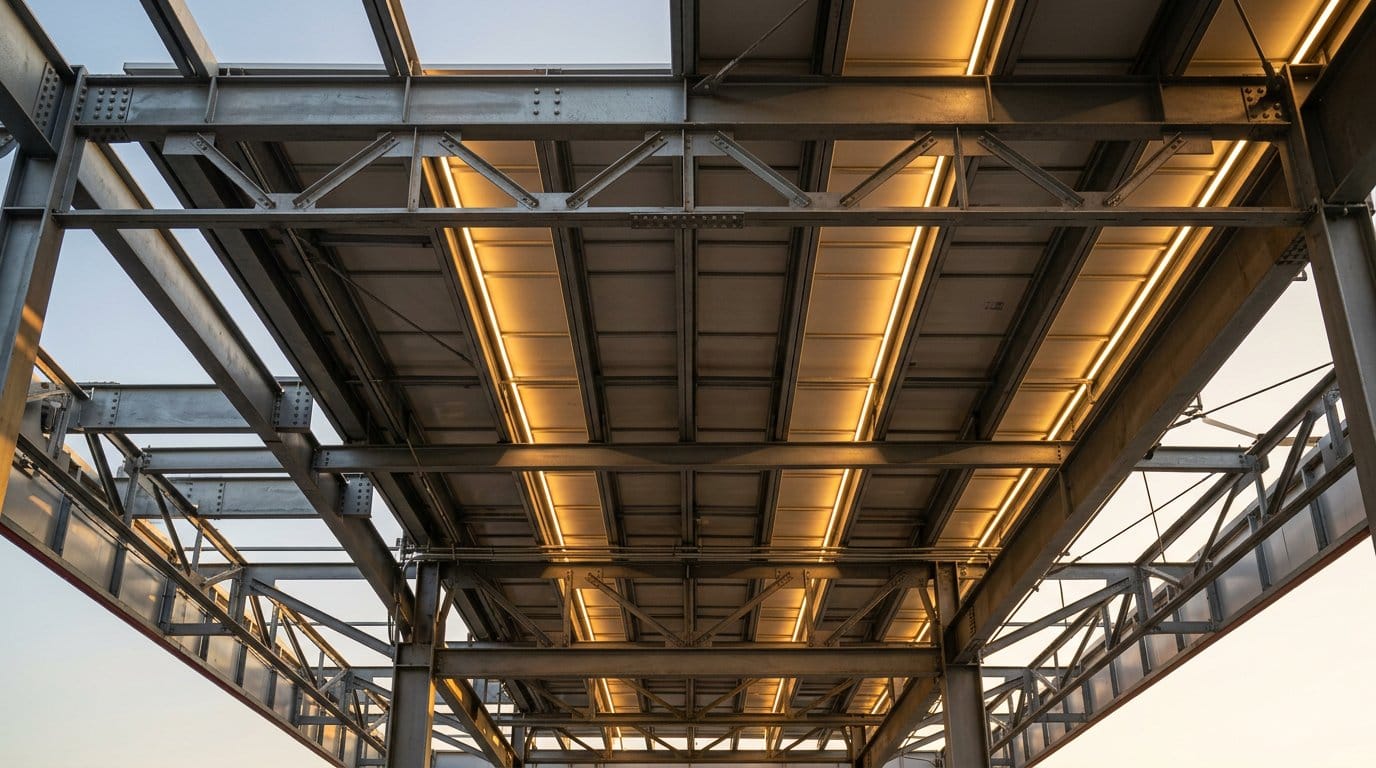
The gas station canopy is the structural element that defines the capacity and visual profile of the development. The choice of roofing system affects construction cost, durability, aesthetics and build time. Petrol Group has designed canopies for hundreds of gas stations in Brazil. The roofing system is defined in the gas station architecture project.
Metal roofing systems for gas stations
Insulated sandwich panel (thermoacoustic panel): the most used system on new stations. Two galvanized steel faces with an EPS or PUR core. Excellent thermal insulation, clean finish, fast installation. 50 mm (about 2 in) thickness for gas station canopies. Galvanized trapezoidal (corrugated) panel: more economical, simpler installation, no insulation — suitable for cold climates or canopies with a ceiling lining. Standing seam panel: a premium system with concealed fasteners — a more sophisticated look, used at high-end stations. Tensioned membrane: PVC fabric on cables — lower cost, organic shapes possible, shorter service life (10–15 years).
Steel structure: minimum sizing
The steel structure of a gas station canopy must be sized by a structural engineer licensed in your state, using the loads required by the building code adopted in your jurisdiction. The critical parameters: regional wind load, clear span between columns (6–8 m, about 20–26 ft, is standard; truck stops reach 12 m, about 39 ft) and snow load where applicable. Square or box-section columns are the most common — carbon steel tube, galvanized or painted with epoxy paint.
Height and clearance: what branded stations require
Each fuel brand sets a minimum clearance in its visual standards, so check yours before design. As a Petrol Group design reference from projects in Brazil: at least 4.5 m (about 14 ft 9 in) of clear height for passenger vehicles; for stations serving trucks (highways), at least 5.0 m (about 16 ft 5 in) — and Petrol Group recommends 5.5 m (about 18 ft) for operational margin. Confirm the figures required by your brand and your local authority (AHJ). See the complete guide to the gas station canopy.
What drives the cost of a metal canopy
Insulated sandwich panel plus steel structure is the most expensive of the common systems, trapezoidal panel plus structure sits in the middle, and tensioned membrane is the lowest-cost option. The difference between systems on a medium-sized canopy can be very large — so the choice must be based on technical analysis, not only on the first quote. Get quotes on an identical specification before comparing.
Frequently asked questions
How much does the roof weigh and how does that affect the foundations?
Sandwich panel: ~12–18 kg/m² (about 2.5–3.7 psf). Trapezoidal panel: ~8–12 kg/m² (about 1.6–2.5 psf). The total weight of the canopy must be included in the foundation calculation — different systems require foundations of different dimensions.
Does a metal roof need periodic repainting?
Galvanized steel with epoxy paint: repaint every 8–12 years. Lacquered aluminum: no need to repaint within its normal service life.
See also: building a gas station in 2026 and the construction documents that specify the correct system.