




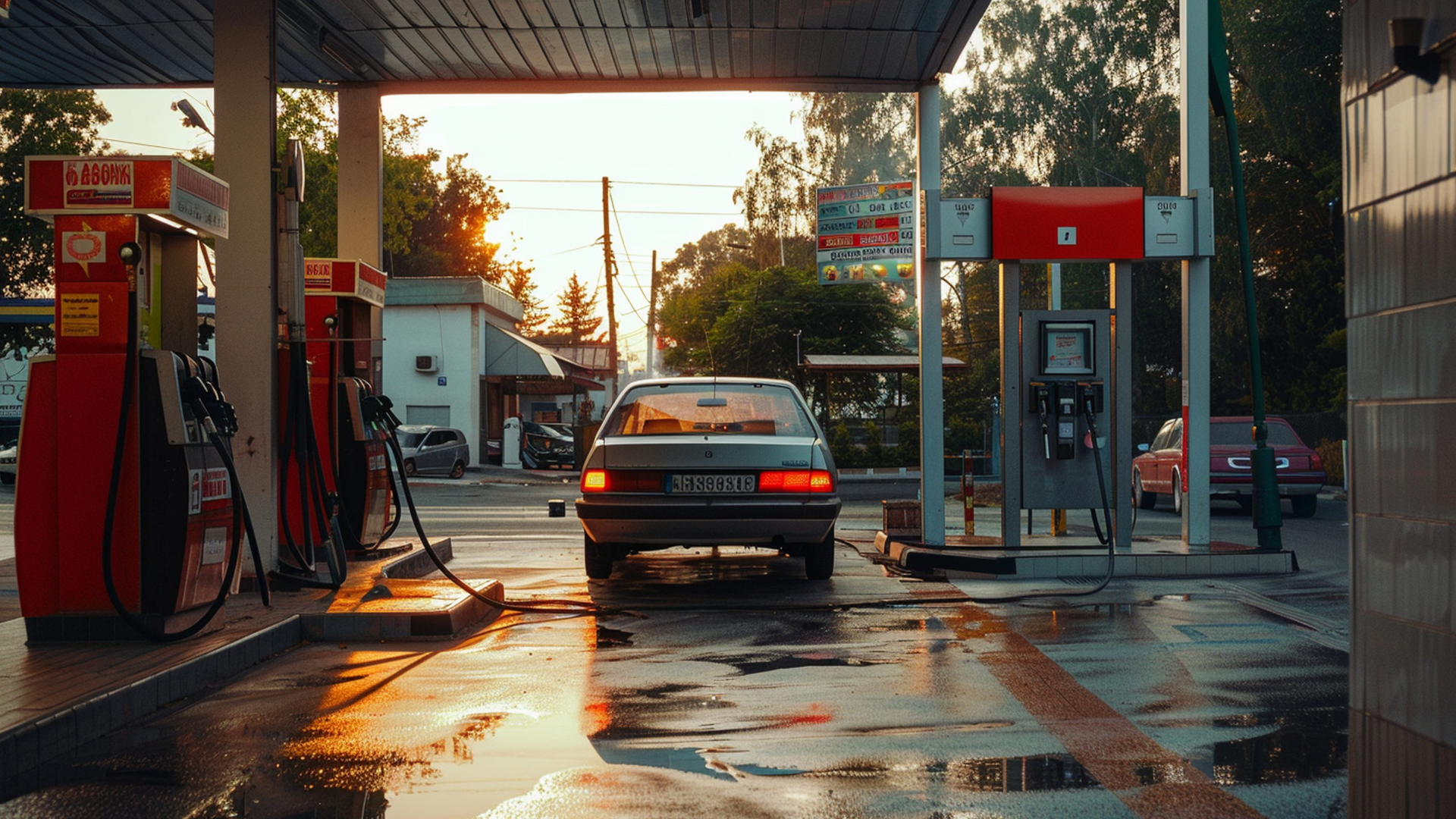
Digital transformation has reached fuel retail in full force. Unattended and self-service gas stations are no longer a trend: they are how many operators run efficiently, cut costs and give drivers a modern experience. Automation, pay-at-the-pump and digital systems are changing how customers fuel, pay and relate to the station. As an owner or investor, you need to evaluate these changes now so your business does not fall behind.
Technology also opens room to grow revenue, build loyalty and make decisions based on real data. But before you take the attendant off the forecourt, check two things: what your state allows and what the fire code adopted where you operate requires.
What unattended gas stations are and why they are growing
At a self-service station the driver fuels the vehicle without an attendant doing it for them, which is the norm in most of the United States. An unattended station goes further: NFPA 30A, the model code for motor fuel dispensing facilities, defines it as one with no attendant or employee on duty, where the customer does the dispensing. Drivers fuel and pay at the dispenser by card, mobile wallet, app or fleet card, while the site is managed remotely.
The model combines the speed of self-service with real-time control over inventory, cash flow and customer behavior. Fleet cardlock sites and 24-hour pumps on highways and in rural areas are the most common examples.
How this technology changes the customer experience
Today’s driver wants convenience: speed, autonomy and simple ways to pay. At a self-service or unattended dispenser the process is straightforward:- 1- The driver pulls up to the dispenser
- 2- Pays at the pump, by card, contactless or app
- 3- Selects the fuel grade
- 4- Fuels and leaves in a few minutes
Where self-service is legal in the U.S.
Customer self-service is allowed in almost every state. The two exceptions to watch:- New Jersey bans self-service at retail gasoline stations. Under the Retail Gasoline Dispensing Safety Act (N.J.S.A. 34:3A-4 et seq.), an attendant may not let anyone who is not an attendant dispense fuel into a vehicle tank or a container (N.J.S.A. 34:3A-6). The state rules exclude diesel dispensing and employer stations used only by a company’s employees and not open to the public (N.J.A.C. 12:196-1.1).
- Oregon changed its law in 2023 with House Bill 2426. According to the Oregon State Fire Marshal, drivers in 20 rural counties can pump their own gas at any station, any time. In 16 other counties, stations may offer self-serve at up to half of their pumps, with attended service at the rest, signs identifying each, self-serve only while an attendant is available and the same price for both.
What the fire codes require for unattended sites
Most states and cities adopt the International Fire Code (IFC) or NFPA 30A, almost always with local amendments. Under IFC Section 2304.3:- unattended self-service facilities are allowed only where approved, and as a condition of approval the owner or operator must provide, and be accountable for, daily site visits and regular equipment inspection and maintenance;
- emergency controls must be provided and must be of a type that is only manually resettable; for exterior dispensers, the emergency disconnect switch goes outside, within 100 feet of but not less than 20 feet from the dispensers (IFC 2303.2);
- operating instructions must be posted on every dispenser and show where the emergency controls are;
- an approved emergency procedures sign (“In case of fire, spill or release: use emergency pump shutoff, report the accident”) must be posted in a conspicuous location;
- a telephone that does not require a coin, or another approved and clearly identified means to notify the fire department, must be on site;
- dispensers must be set to limit uninterrupted delivery to 25 gallons and require a manual action to resume.
Accessibility: refueling assistance under the ADA
The Department of Justice says self-serve stations must provide refueling assistance on request to customers with disabilities, tell customers how to get it (signs on or near the pumps) and charge only the self-serve price. That is not required while the station operates on a remote-control basis with a single employee. The guidance does not address sites with no employee at all, so get legal advice before going fully unattended. In design, operable parts of fuel dispensers on existing curbs may be up to 54 inches high (U.S. Access Board).Environmental rules still apply with nobody on site
The federal underground storage tank rules (40 CFR Part 280) still apply. EPA’s Musts for USTs sums them up: monthly release detection (automatic tank gauging is one accepted method), walkthrough inspections every 30 days and trained Class A, B and C operators. The Class C operator gives the immediate response to a problem, so an unattended site needs a clear plan for who answers an alarm. Many states add their own UST requirements.Main technologies behind unattended stations
Digitalization does not depend on a single solution. In practice, the combination of tools creates an efficient, integrated and secure ecosystem. Among the technologies most used at unattended stations:Self-service dispensers and payment terminals
First, dispensers with pay-at-the-pump terminals let the customer complete the whole process alone. Card readers, contactless payment, QR code readers and intuitive screens make the operation simple, while every sale is recorded automatically.Payment and loyalty apps
Apps make the relationship between station and driver more personal. Besides mobile payment, they offer cashback, personalized coupons and fueling history. As a result, customers come back more often, and you can follow their buying behavior.Integrated management and automation
Technology lets all operational control happen on a single platform: inventory, sales, reconciliation, purchasing, cash flow and performance indicators. The operation stops being reactive and becomes strategic.Real-time monitoring
Automatic tank gauges, sensors, cameras and remote alarms help prevent errors, spot losses and follow the station minute by minute, even from another city. With this information, you make faster and better decisions.Competitive advantages for the station owner
Investing in automation brings immediate gains to the operation, mainly in efficiency and cost control. The main benefits:Lower operating costs
Where state law and the fire code allow it, automated systems let you run with fewer people per shift and eliminate repetitive tasks. Digitalization also reduces the risk of human error, financial losses and cash discrepancies.More efficiency in every fill-up
Automation speeds up service and cuts the time each customer spends on the forecourt. Fuel throughput per hour goes up, generating more revenue with the same physical infrastructure.A modern experience for the customer
Unattended stations meet the expectations of a digital consumer: no lines, fast payment and simple interactions. This model improves satisfaction, builds loyalty and generates positive reviews.Data-driven management
Instead of relying on spreadsheets or guesswork, the owner decides with concrete information: sales volume, peak hours, ideal price and performance by product.Technology trends that will shape the sector
Unattended stations follow global changes in mobility and consumption. In the coming years, some trends should grow stronger and directly affect your operation:EV charging
Adding EV chargers can be a strategic differentiator, especially at high-traffic locations. Note that the U.S. Access Board says EV chargers are not fuel dispensers for the reach range exception: it recommends operable parts no higher than 48 inches.Contactless and mobile payments
Contactless cards, mobile wallets and full app integration make the process simpler. These tools are already common in retail and food service, and they are moving quickly into fuel.Renewable energy
Solar panels reduce operating costs and position the station as an innovative, responsible brand. This kind of solution is likely to be valued more and more.Data intelligence
With the information collected at every fill-up, you can optimize prices, forecast demand and create personalized campaigns. Data is the new fuel for smart decisions.How to prepare your station for the unattended model
If you want to start moving toward unattended operation, follow a step-by-step strategy. Some first actions:- – confirm what your state allows and talk to the fire marshal (AHJ) before anything is designed
- – upgrade dispensers and payment systems
- – plan emergency controls, signs and communications as the adopted code requires
- – integrate the POS with a management platform and remote monitoring
- – define who responds to alarms and who your trained UST operators are
- – adopt a digital loyalty tool and train the team on the new process
- – track indicators and adjust the operation
What Petrol Group handles in the design
Petrol Group designs the station; it does not sell or install equipment. For a self-service or unattended site we deliver the forecourt layout and islands, the canopy, the location of the emergency shutoff and required signs, dispenser graphics and pump toppers, the convenience store and the brand identity, with 3D renderings, construction documents and specifications, working remotely. A locally licensed architect or engineer of record signs and files the project with your AHJ.
Why invest now?
Unattended stations are the natural evolution of fuel retail. They reduce costs, put the customer at the center of the experience and help your station grow efficiently. Technology at gas stations is not a fad: it is a way to transform the business and stay competitive in the years ahead.
If you want better margins, smarter decisions and a modern experience, the time to invest is now, starting with the rules that apply where you operate. Those who adapt first capture the gains before the competition.
Want to make a difference and secure your gas station’s success? Count on a design group that has worked only with gas stations and convenience stores since 1997, with 983+ projects in 16 countries. Contact us for more information!With Petrol Group, you have everything for your gas station design in one place!Keep reading: Can you profit from EV charging at your gas station?