




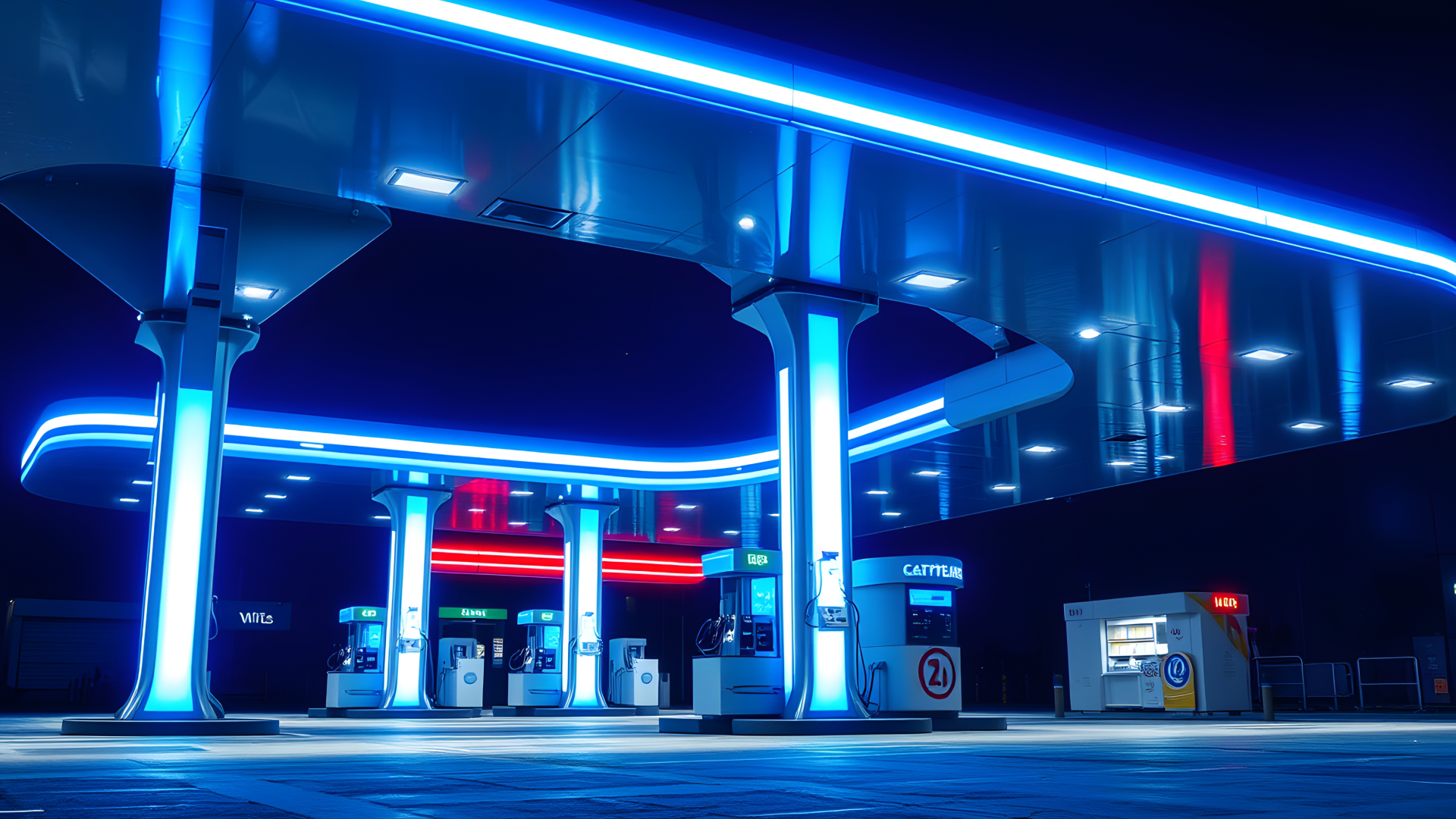
Gas station lighting serves three simultaneous purposes: safety (crime prevention), regulation (distributor brand standards), and marketing (the station visible from 500 meters at night is the one drivers stop at). The Petrol Group team has specified gas station lighting across 16 countries.
IP65 vs IP68: which rating for gas stations
IP65 (dust-tight, protected against water jets) is the minimum for forecourt luminaires. IP68 (dust-tight, protected against continuous immersion) is required for fixtures embedded in paving, near drainage channels, or exposed to high-pressure washing at close range. Standard forecourt flood/bay lights: IP65 minimum. Under-canopy luminaires with internal drainage: IP65. Floor-level fixtures near islands: IP68.
Minimum lux requirements
Forecourt/fuelling area: 200 lux minimum (major brands typically require 300 lux). Convenience store interior: 400-500 lux. Restrooms: 200-300 lux. Signage illumination (canopy fascia): uniform backlight with zero hot spots. Most US state codes and international fuel retail standards specify a minimum of 300 footcandles at dispenser level — confirm local requirements.
Color temperature: what to specify
Forecourt: 5000K-6500K (cool white) — maximum visibility, best for safety. Convenience store: 3000K-4000K (warm white) — creates a welcoming retail environment that increases dwell time and basket size. Mixing temperatures is correct design — don’t use 6500K inside the store.
ROI calculation
Replacing sodium vapor or metal halide with LED on a medium-sized station (20-30 fixtures): 40-60% energy reduction. Monthly savings: USD 600-1,500 depending on tariff. Payback period: 18-36 months. Post-payback life: 15-20 years of pure savings.
FAQ
Does LED require special disposal compared to older lamps?
LED fixtures contain no mercury (unlike fluorescent), making disposal simpler. Standard electronic waste protocols apply.
See also: gas station visual communication and canopy fascia materials guide.