




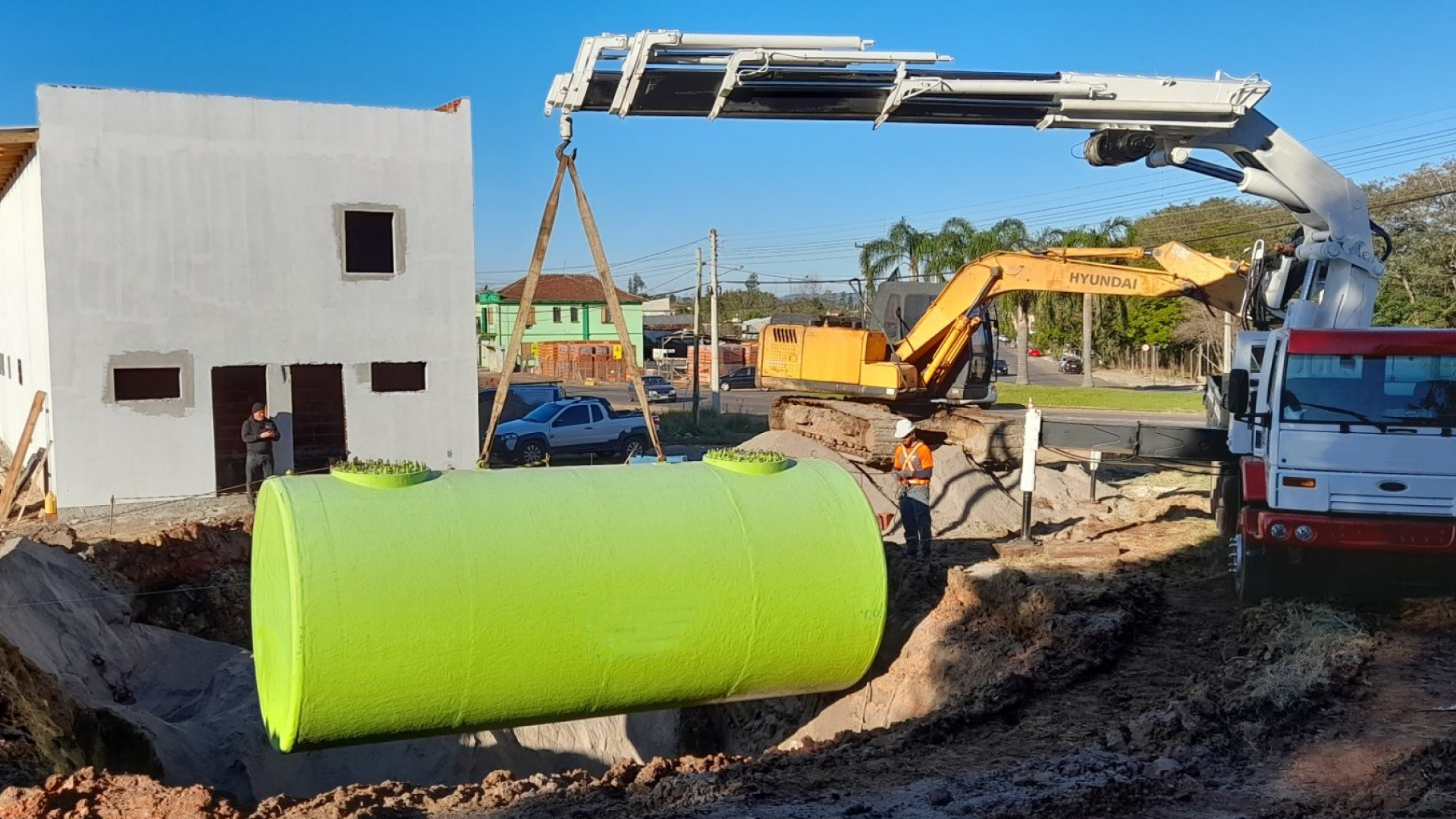
The core gas station equipment falls into five systems: the underground storage tank (UST) system (double-wall tanks, piping, containment sumps, spill buckets and overfill prevention), the dispensers and the submersible turbine pumps that feed them, release detection and inventory control (automatic tank gauges, interstitial sensors and line leak detectors), forecourt drainage with an oil-water separator where your permit calls for one, and the service equipment that brings customers in. The federal baseline for tanks and piping is the EPA rule at 40 CFR Part 280; your state UST program, the fire code your state adopted (NFPA 30A or the International Fire Code) and state weights and measures add their own layer.
This guide covers what each piece does, the federal numbers that drive its selection and testing as of November 2026, and how it fits into the site plan. For the full map of codes, see our guide to gas station codes and standards.
Equipment and rules at a glance
| Equipment | What it does | Key federal rule | How often it is checked |
|---|---|---|---|
| Double-wall tank (steel or fiberglass) | Stores each fuel grade | 40 CFR 280.20: secondary containment and interstitial monitoring for tanks installed or replaced after April 11, 2016 | Monitored at least every 30 days |
| Piping and line leak detector | Carries fuel to the dispensers and stops flow on a leak | 40 CFR 280.41 and 280.44 | Leak detector tested every year |
| Spill bucket and containment sumps | Catch drips at the fill and around piping connections | 40 CFR 280.35 | Tested every 3 years unless double-walled and monitored |
| Overfill prevention | Shuts off or alarms before the tank overfills | 40 CFR 280.20(c) and 280.35(a)(2) | Inspected every 3 years |
| Under-dispenser containment | Holds leaks from dispenser connections | 40 CFR 280.20(f) | Required for new dispenser systems after April 11, 2016 |
| Dispenser | Meters and delivers fuel | NIST Handbook 44 (state weights and measures); 40 CFR 1090.1550 | State inspection schedule |
| Automatic tank gauge (ATG) | Measures inventory and runs leak tests | 40 CFR 280.43(d) | Continuous, with monthly results |
| Oil-water separator | Holds oil from forecourt runoff | State stormwater permit and local sewer rules | As your permit sets |
Storage tanks: double-wall, jacketed and fiberglass
A new UST at a gas station is double-wall. Under 40 CFR 280.20, tanks and piping installed or replaced after April 11, 2016 must be secondarily contained and use interstitial monitoring. The secondary wall has to hold a leak from the primary wall until it is detected and removed. The only exception in that paragraph is suction piping that meets the design limits of 280.41(b)(1)(ii).
The market offers two main builds:
- Steel with a jacket or second wall: a steel primary tank inside a non-metallic jacket or a second steel wall, with an interstitial space that a sensor watches.
- Fiberglass-reinforced plastic (FRP), double-wall: no corrosion protection needed for the tank shell, common where soils are aggressive.
Material compatibility is a federal requirement, not a preference. Owners must notify the implementing agency at least 30 days before switching to fuel with more than 10 percent ethanol or more than 20 percent biodiesel, and must show the tank, piping, sumps, pumps and leak detection are compatible, through a listing by an independent testing laboratory or written manufacturer approval (40 CFR 280.32). If you plan to sell E15 or higher blends later, buy compatible equipment now.
Sizing tanks and compartments
No federal rule sets tank size. Work it out grade by grade:
- Estimate average daily gallons for each grade (market study or the station’s history).
- Decide how many days of supply you want between deliveries.
- Multiply, then allow for overfill prevention. Under 280.20(c), the device must shut off flow when the tank is no more than 95 percent full, or alert the driver at no more than 90 percent, or restrict flow 30 minutes before overfilling.
- Pick the next standard size from the manufacturer and check that a full transport load fits without leftover product.
Example: a station selling 2,000 gallons a day of regular that wants three days of supply needs 6,000 usable gallons. At a 95 percent shutoff, nominal capacity comes to about 6,300 gallons, so you go to the next size up. Low-volume grades such as premium or off-road diesel often share a compartmented tank.
Dispensers and submersible pumps: flow rates and metering
Most U.S. stations use dispensers fed by a submersible turbine pump (STP) in each tank, which pushes fuel through pressurized piping. Suction systems, where a pump inside the dispenser pulls fuel from the tank, are found mostly at older or smaller sites.
Flow rate: the federal cap and the catalog numbers
For gasoline into motor vehicles, the dispensing flow rate must not exceed 10 gallons per minute, controlled anywhere in the pump or dispenser system (40 CFR 1090.1550). The same section limits the nozzle spout to an outside diameter of no more than 21.3 mm at the terminal end.
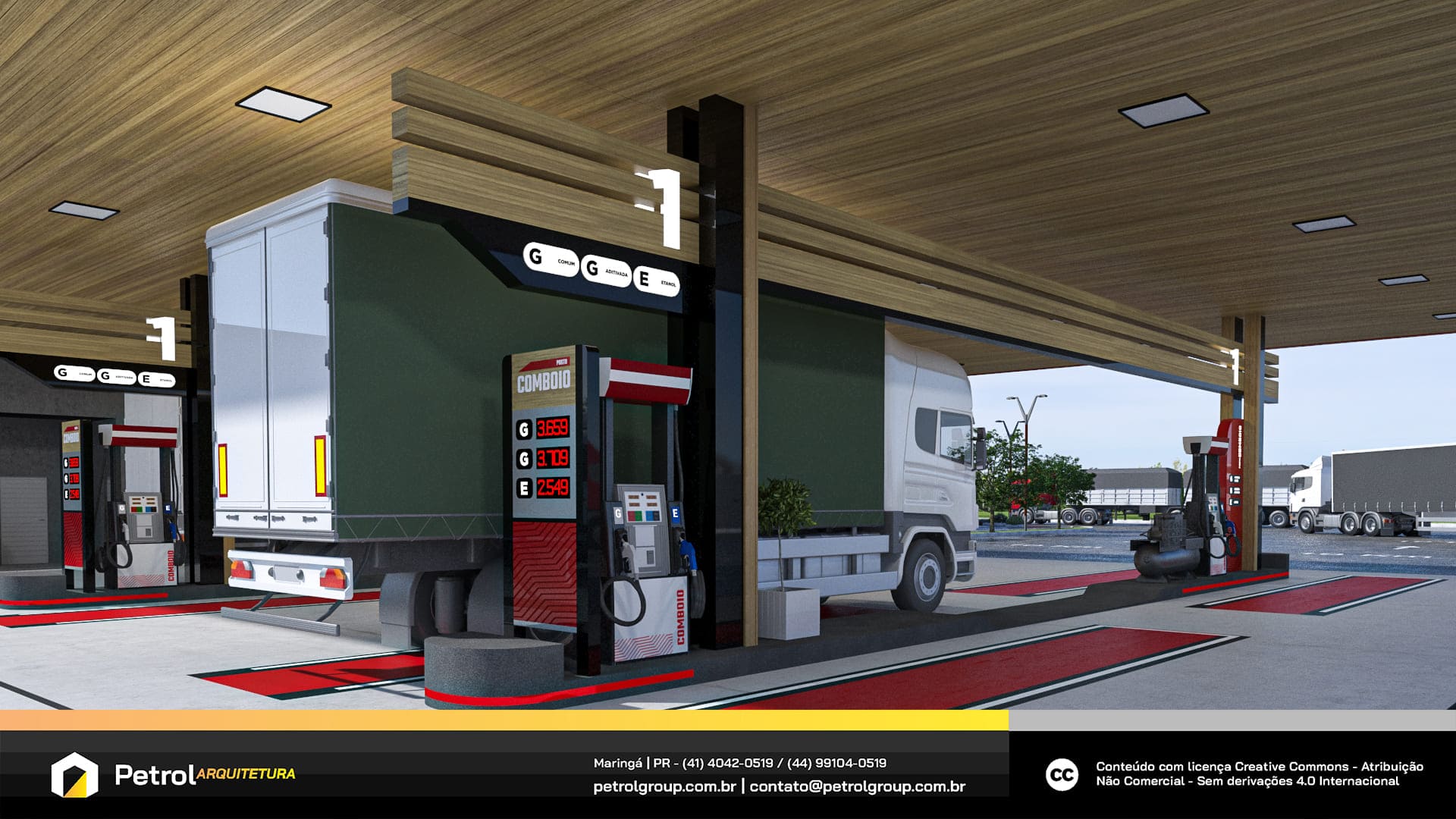
Diesel for trucks has no such cap, and truck-stop equipment is built for speed. Gilbarco states its Ultra-Hi flow diesel master and satellite dispensers pump up to 63 gpm combined when used together, assuming 30 psi inlet pressure, and about 32 gpm each when used separately. Actual flow depends on the STP, the pipe runs and the inlet pressure, so the flow target belongs in the piping design, not only in the dispenser order.
Separating truck lanes from car lanes keeps a semi that takes much longer to fill from blocking the car islands. Spacing and stacking are covered in our fueling island layout guide, and pump toppers and graphics in pump communicators.
Metering accuracy
Dispenser accuracy is a state weights and measures matter. According to NIST, a new edition of NIST Handbook 44 (specifications and tolerances for measuring devices) is published every year, and all 50 states adopt either the current edition or an older one. Ask the supplier for the dispenser’s type approval and plan the calibration schedule with your state program.
Valves, sumps, leak detectors and filters
The small parts between tank and nozzle decide whether a leak stays contained. What federal rules require of them:
- Automatic line leak detector: on pressurized piping, it must detect a leak of 3 gallons per hour at 10 psi line pressure within 1 hour, by shutting off or restricting flow or by an alarm, and it is tested every year (40 CFR 280.44).
- Line tightness test: where used, it must detect 0.1 gallon per hour at one and one-half times operating pressure (280.44(b)). Pressurized piping installed on or before April 11, 2016 needs an annual tightness test or monthly monitoring (280.41(b)).
- Check valve on suction piping: suction piping is exempt from release detection only if it runs below atmospheric pressure, slopes back to the tank and has a single check valve located directly below and as close as practical to the suction pump (280.41(b)(1)(ii)).
- Spill buckets and containment sumps: tested for liquid tightness at least once every three years by vacuum, pressure or liquid testing, unless they are double-walled and the space between the walls is monitored (40 CFR 280.35).
- Overfill prevention: inspected at least once every three years to confirm it activates at the correct level. Test and inspection records are kept for three years.
- Emergency shutoff and dispenser shear valves: location and labeling come from the fire code your state adopted; they belong on the site plan from the start.
Filters sit in each dispenser and, on diesel, are the last barrier against water and sediment reaching the customer’s engine. Keep a water-finding routine for diesel tanks and change filters on the manufacturer’s schedule or when flow drops.
Release detection and automatic tank gauges
Every tank must be monitored for releases at least every 30 days. Tanks installed after April 11, 2016 do it through interstitial monitoring (40 CFR 280.41). The ATG is the console that ties it together: probes in each compartment read product and water levels, and sensors in the interstitial space and sumps trigger alarms.
| Method | Federal performance standard | Section |
|---|---|---|
| ATG leak test | Detects 0.2 gallon per hour from any part of the tank that routinely holds product | 40 CFR 280.43(d) |
| Tank tightness test | Detects 0.1 gallon per hour, accounting for thermal expansion, vapor pockets and the water table | 40 CFR 280.43(c) |
| Interstitial monitoring | Detects a leak from any portion of the tank that routinely holds product | 40 CFR 280.43(g) |
| Line leak detector | 3 gallons per hour at 10 psi within 1 hour | 40 CFR 280.44(a) |
On top of the equipment tests, 40 CFR 280.36 requires walkthrough inspections: every 30 days for spill prevention equipment and release detection (checking for alarms and current records), and every year for containment sumps and handheld detection devices.
Inventory control: daily reconciliation
Inventory control is the U.S. counterpart of a fuel stock ledger. When it is used as part of release detection, 40 CFR 280.43(a) sets the method:
- Record deliveries, withdrawals and the amount remaining in each tank every operating day.
- Measure product level over the full tank height to the nearest one-eighth of an inch.
- Reconcile deliveries by gauging before and after each drop, made through a drop tube that reaches within one foot of the tank bottom.
- Investigate monthly variations of 1.0 percent of flow-through plus 130 gallons or more.
Even where your legal method is interstitial monitoring, daily reconciliation from the ATG is how you spot meter drift, theft or a leak early.
Oil-water separator and forecourt drainage
Forecourt runoff under the canopy, the fill area, a car wash and oil-change bays can all carry oil. Where your state stormwater permit or the local sewer authority requires it, that water goes through an oil-water separator before discharge, while clean roof water bypasses it so it does not overload the unit. Discharge limits come from your permit and the local pretreatment rules. Place the separator where a vacuum truck can reach it, and size it for the area that actually drains to it. Permitting is covered in our gas station environmental permits guide.
Inspection and testing calendar
| Task | Frequency | Source |
|---|---|---|
| Release detection on tanks | At least every 30 days | 40 CFR 280.41 |
| Walkthrough: spill buckets and release detection equipment | Every 30 days | 40 CFR 280.36 |
| Walkthrough: containment sumps and handheld devices | Annually | 40 CFR 280.36 |
| Automatic line leak detector test | Annually | 40 CFR 280.44(a) |
| Spill bucket and sump tightness test (single-wall) | Every 3 years | 40 CFR 280.35 |
| Overfill prevention inspection | Every 3 years | 40 CFR 280.35 |
| Notice before storing E10+ or B20+ | 30 days ahead | 40 CFR 280.32 |
The federal rule names PEI RP1200, the Petroleum Equipment Institute’s recommended practice for testing spill, overfill, leak detection and secondary containment equipment, as an accepted code of practice for these tests. Your state may set shorter intervals. For the tank and line test itself, see our tank tightness testing guide, and for the EPA program overview, the EPA underground storage tank site.
Service equipment: car wash, oil change, air and vacuum
Fuel brings the visit; services raise the ticket. Each one needs equipment, utilities and space on the plan:
- Car wash: manual, express or automatic. Equipment ranges from pressure washers and vacuums to an in-bay automatic or tunnel. Wash water goes to the separator or a reclaim system. The International Carwash Association publishes industry data, and our car wash at the gas station guide covers the layout.
- Oil change: a bay with a lift or pit, oil extraction equipment, used-oil storage and a lubricant stockroom. Used oil is managed under the federal used oil rules (40 CFR Part 279) and your state program.
- Air and vacuum: a digital tire inflator in a visible spot, an air compressor sized for it, and vacuum stations away from the fueling lanes.
- Alternative fuels: where fleets ask for it, adding CNG to a gas station needs its own compressor area and setbacks.
Water, air, power and drainage points for all of these belong in the construction documents before ground is broken. Moving a bay after the slab is poured means cutting concrete and rerouting drains.
How equipment shapes Petrol Group projects
In Petrol Group’s gas station architecture work, tanks, dispensers and drainage are placed at the schematic design stage, before the facade. Three projects from the portfolio show how:
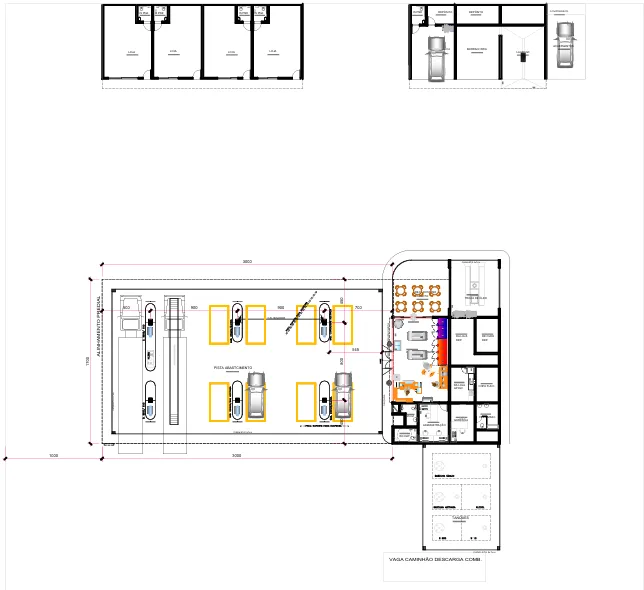
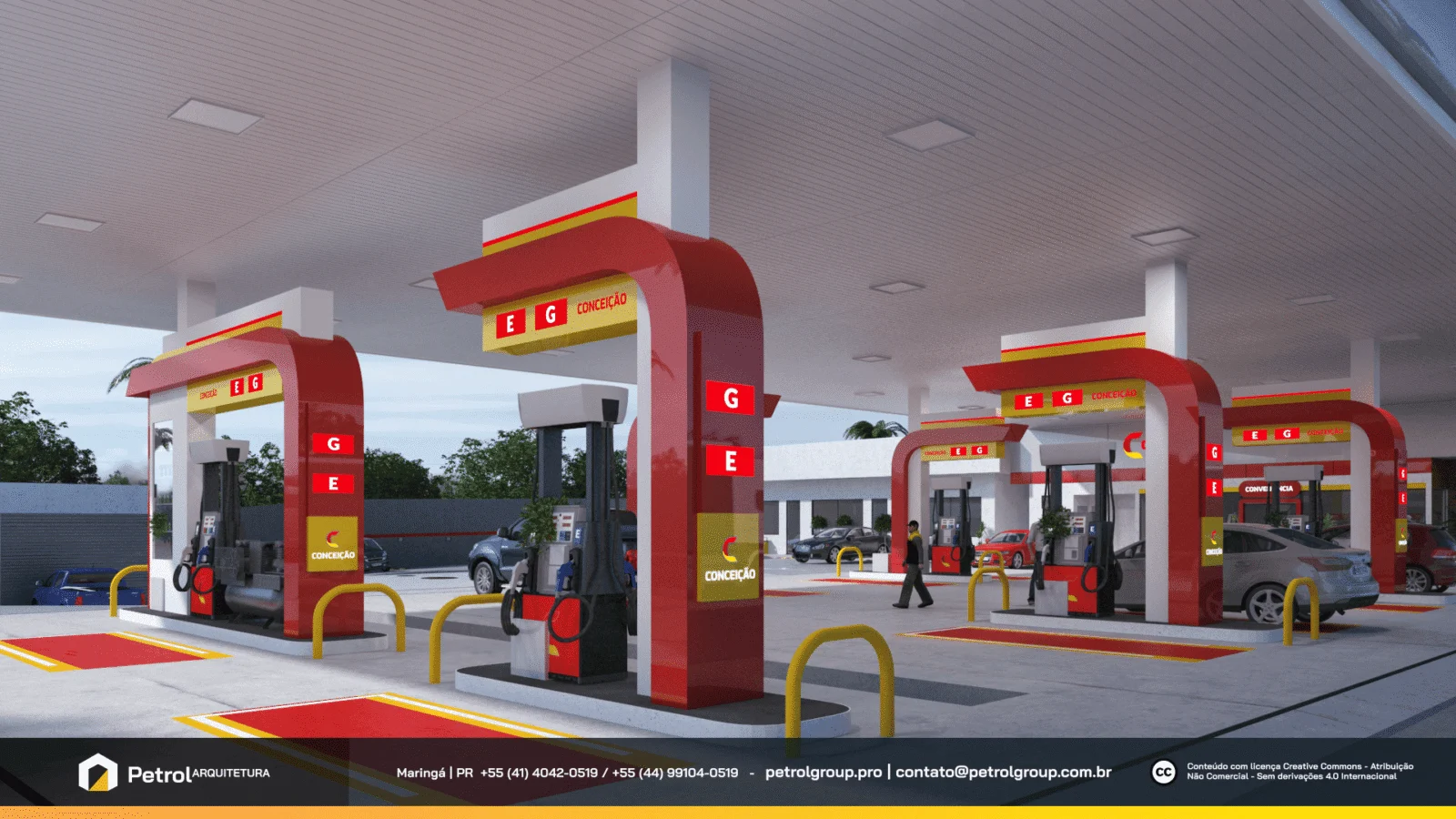
- Conceição gas station, Capela do Alto Alegre, Bahia, Brazil: from schematic design to construction documents, the team laid out the dispensers, canopy, paving and utilities. In the schematic plan above, the tank block sits beside the delivery truck space, clear of the fueling lanes.
- Comboio gas station, Unaí, Minas Gerais, Brazil: a station integrated with a shopping center, with fueling areas defined in the schematic design and detailed in the construction documents. The site plan separates truck fueling from car fueling.
- Pepé gas station, Uauá, Bahia, Brazil: the construction documents include parking and charging areas for electric vehicles and refrigerated trucks, tire inflation, lubricant sales and a system to close off the pumps at night.
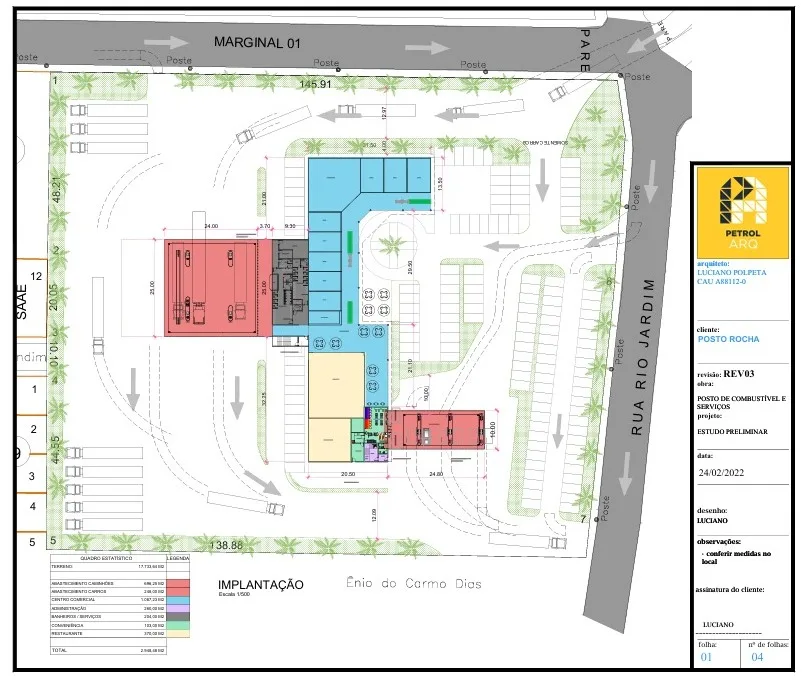
Petrol Group has worked only with gas stations for 29 years, with 983+ projects delivered in 16 countries. More examples are in the portfolio. To decide how many dispensers, what flow rates and which tanks fit your site before you ask suppliers for quotes, our consulting team runs that study.
Frequently asked questions
Do new gas station tanks have to be double-wall?
Yes. Under 40 CFR 280.20, tanks and piping installed or replaced after April 11, 2016 must be secondarily contained and use interstitial monitoring. New dispenser systems installed after that date also need under-dispenser containment.
What is the maximum flow rate for a gas pump?
For gasoline dispensed into motor vehicles, 10 gallons per minute under 40 CFR 1090.1550. Truck diesel is not capped by that section; Gilbarco rates its Ultra-Hi master and satellite at up to 63 gpm combined at 30 psi inlet pressure.
How often do spill buckets and sumps need testing?
At least once every three years, unless they are double-walled and the space between the walls is checked during the 30-day walkthrough (40 CFR 280.35). Overfill prevention is inspected every three years, and records are kept for three years.
What does an automatic tank gauge have to detect?
A leak of 0.2 gallon per hour from any part of the tank that routinely holds product, under 40 CFR 280.43(d). It also has to meet the inventory control requirements of the same section.
How full can a fuel tank be filled?
Overfill prevention must shut off flow at no more than 95 percent, alert the driver at no more than 90 percent, or restrict flow 30 minutes before overfilling (40 CFR 280.20(c)). Size tanks on usable volume, not nominal capacity.
Can I switch my tanks to E15 or higher blends?
Only with compatible equipment. You must notify your implementing agency at least 30 days before storing more than 10 percent ethanol or 20 percent biodiesel and show compatibility through a lab listing or written manufacturer approval (40 CFR 280.32).
Who checks dispenser accuracy?
Your state or local weights and measures office. All 50 states adopt NIST Handbook 44, current or older edition, as the standard for measuring devices, including retail fuel dispensers.