




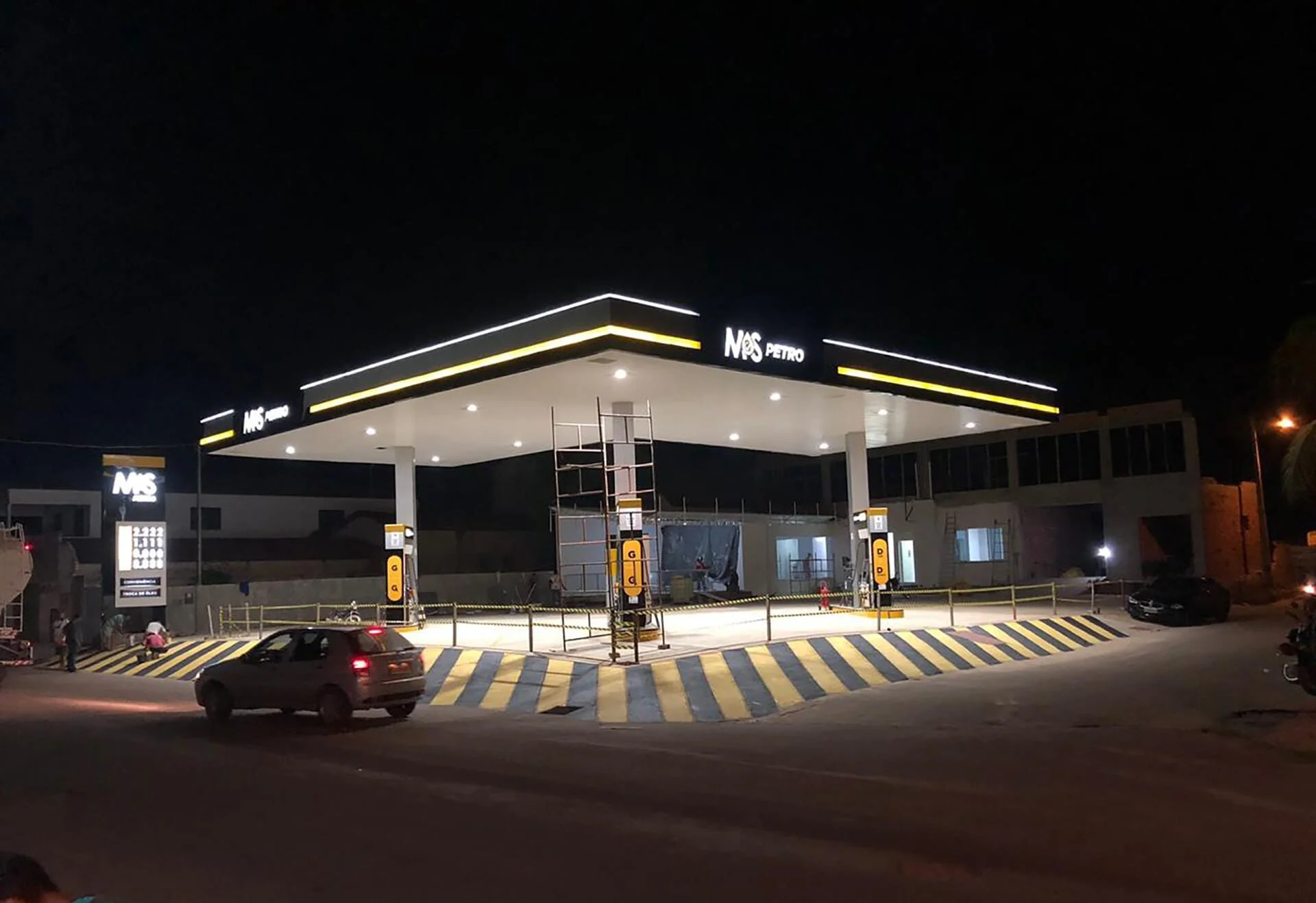
Summary: a gas station reimage replaces what drivers see (brand, canopy fascia, columns, pylon and price sign, pump toppers, lighting and the store facade) without rebuilding the station. Use the checklist below in order: decide the brand first, design every element together in 3D, get permits and bids on the same specifications, then install in phases so the pumps keep selling. Each step lists what to decide and what to have ready.
A common source of reimage problems is doing the pieces separately: a new fascia ordered before the logo is final, a pylon permit filed with the old sign area, LED fixtures that break a city’s light limit. A checklist keeps the order right. It works for independent stations creating their own look and for branded stations applying a supplier’s image manual.
The reimage checklist at a glance
| Step | What to decide | What to have ready |
|---|---|---|
| 1. Survey and goals | What stays, what changes, budget ceiling, target opening date | Site photos, measurements, existing drawings, sign permits on file |
| 2. Brand | Branded or unbranded; new logo or refresh | Logo files, colors, brand manual or supplier image manual |
| 3. Canopy fascia | Material, height, graphics, illuminated logo | Fascia measurements, structural check of the existing canopy |
| 4. Columns | Covers, colors, bases | Column count and sizes |
| 5. Pylon and price sign | Reuse the structure or replace; LED price digits; product lines shown | Sign height and area allowed by your zoning code |
| 6. Dispensers and pump toppers | Graphics only or new dispensers | Dispenser models, topper sizes |
| 7. Lighting | Canopy, site and sign lighting levels | Your city’s lighting limits |
| 8. Store facade | Cladding, storefront sign, windows, entrance | Facade elevations and photos |
| 9. Permits and AHJ | Which permits each item needs | Drawings and specifications for the permit set |
| 10. Bids | Sign shop, canopy contractor, electrician | One specification package for every bidder |
| 11. Phased install | Order of work so the forecourt stays open | A phasing plan and a night or off-peak schedule |
| 12. Closeout | Punch list and future replacements | Final photos, files and a short brand manual |
Step 1: survey the site and set the goal
- Photograph every elevation of the canopy, store, pylon and dispensers, by day and at night.
- Measure fascia height and length, column sizes, pylon cabinet sizes and storefront openings.
- Pull existing sign permits and drawings. They show what your city already approved.
- Write down what must stay (structure, dispensers, pylon base) and what can change.
- Set a budget ceiling and a target date before design starts.
Step 2: decide the brand first
Everything else is sized from the logo, so the brand comes first. A branded station follows its fuel supplier’s image manual. An unbranded station needs a name, logo, colors and rules of use of its own; see brand identity for independent gas stations and branded vs. independent.
- Final logo in vector format, in horizontal and stacked versions.
- Color codes for print, paint and ACM panels.
- A short manual with minimum sizes and clear space, so every sign shop applies the brand the same way.
Steps 3 to 6: design the forecourt as one image
Design the canopy, columns, pylon and pumps together, in 3D, before ordering anything. Seeing the station from the driver’s point of view is how you catch a logo too small for the fascia or a price sign hidden by a tree.
- Canopy fascia: choose the material (ACM, laminated metal or a flexible face), the height, the graphics and whether the logo is lit. Have an engineer confirm the existing canopy can carry the new fascia and signs. Sizes and options are in our canopy dimensions and cost guide.
- Columns: covers in the brand colors, and masonry bases where the city requires them. See column covers.
- Pylon and price sign: decide whether the structure stays, which products the price sign shows and how it reads from the main road. See gas station pylon.
- Dispensers and pump toppers: graphics on existing dispensers are a design job. Replacing dispensers is a fuel-system job with its own rules (Step 9).
Step 7: plan the lighting
LED canopy lighting is one of the most visible upgrades: a June 2026 NACS Daily article on revamping underperforming sites lists new canopies with LED lighting, repaved surfaces and refreshed interiors among the changes that make an old site feel new (NACS). Check local limits first. St. Petersburg, Florida, for example, requires full cut-off or recessed canopy fixtures and caps canopy lighting at 30 foot-candles maintained at grade (city code 16.50.165). Lakeville, Minnesota, asks for recessed canister fixtures and does not allow an illuminated fascia except as its sign rules permit (city code 11-37-3).
Step 8: carry the brand to the store
- Storefront sign sized to the facade and readable from the pumps.
- Cladding and colors that match the canopy, so store and forecourt read as one business. See convenience store front.
- Window graphics that do not block the view into the store.
- If the entrance changes, keep an accessible route of at least 36 in clear width (2010 ADA Standards, 403.5.1).
Step 9: permits and the AHJ
The AHJ (authority having jurisdiction) is the city or county office that reviews and approves the work. A reimage can touch several permits:
- Sign permits: zoning codes set sign area, height and illumination. Canopy signs can have their own cap, for example 20% of the canopy facade in Lakeville, MN, or one sign up to 15% of the canopy face in Franklin, TN.
- Electrical permits: illuminated signs and new lighting are installed under the electrical code your state adopted, based on NFPA 70 (NEC).
- Building permits: new fascia, column covers or facade cladding may need one, with a structural check of the existing canopy.
- Fuel system rules: if you replace dispensers, EPA requires under-dispenser containment for all new dispenser systems installed since April 11, 2016; a system counts as new when both the dispenser and the equipment connecting it to the UST system are installed (EPA). Your state UST program may add its own steps.
Steps 10 to 12: bid, install in phases, close out
- Bid on one specification package. Give every sign shop and contractor the same drawings, materials and colors, so quotes compare like with like. If a sign shop offers to do the design, ask whether you own it: in a September 2021 Signs of the Times survey, 52% of responding sign shops said they charge for design even when the sign is not ordered (Signs of the Times).
- Install in phases. Work one side of the canopy or one island at a time, at night or off-peak, and keep at least part of the forecourt open.
- Close out. Walk the site by day and night, check every color against the specification, collect final photos and files, and keep a short brand manual for the next repair or new site.
Timeline phases
- Discovery: survey, photos, goals and budget.
- Design: brand, 3D of the whole station, specifications.
- Permits and bids: run in parallel on the same package.
- Fabrication: signs, fascia panels, toppers and covers.
- Phased installation: with the forecourt open.
- Closeout: punch list and files.
Permit review time depends on your AHJ, and fabrication time on your sign shop’s queue, so ask both for dates before you announce a reopening.
Real reimage projects
- Checkout, Dallas, Texas: brand refinement and a new premium fuel brand, “Power”, applied in 3D to the canopy fascia, price sign, pump toppers and store facade, with design specifications to guide the signage company’s execution.
- Texas Fuel, Diadema (São Paulo, Brazil): a complete renovation of an outdated station covering canopy fascia, store facade, column cladding, pump toppers and a price sign with high-brightness LED panels placed to reach the main road.
More in the gas station rebranding guide and in our portfolio.
FAQ
Do I need a permit to reimage my station?
Usually, for new or changed signs and for electrical work, and sometimes for fascia or facade cladding. Ask your AHJ before ordering fabrication.
Can I stay open during a reimage?
In most cases, yes, with a phasing plan that works one area at a time and keeps part of the forecourt selling.
Do I need a new logo?
Not always. A refresh can keep the name and update colors and layout. If the old logo does not read on a canopy fascia or a price sign, it is time for a new one.
What does my sign shop need from the designer?
Dimensioned drawings of each element, materials and finishes, color codes, vector artwork and mounting notes. Petrol calls this package design specifications.
How much does a reimage cost?
It depends on which elements change and on fabrication quotes in your area. For a Petrol design proposal, request a quote.
Sources (accessed November 2026): NACS Daily, “A Roadmap for Revamping Underperforming Fuel Retail Sites” (June 11, 2026); U.S. EPA, secondary containment and under-dispenser containment requirements; NFPA 70, National Electrical Code; U.S. Department of Justice, 2010 ADA Standards for Accessible Design, 403.5.1; Signs of the Times, “More Than Half of Sign Shops Charge for Design Even When the Sign Isn’t Ordered” (Sept 20, 2021); St. Petersburg, FL, City Code 16.50.165; Lakeville, MN, City Code 11-37-3; Franklin, TN, Zoning Ordinance 5.1.4.H; Petrol GROUP project pages linked above. Rules vary by city and state: confirm with your AHJ.
Planning a reimage? Request a quote with photos of the station, the site address and what you want to change.