




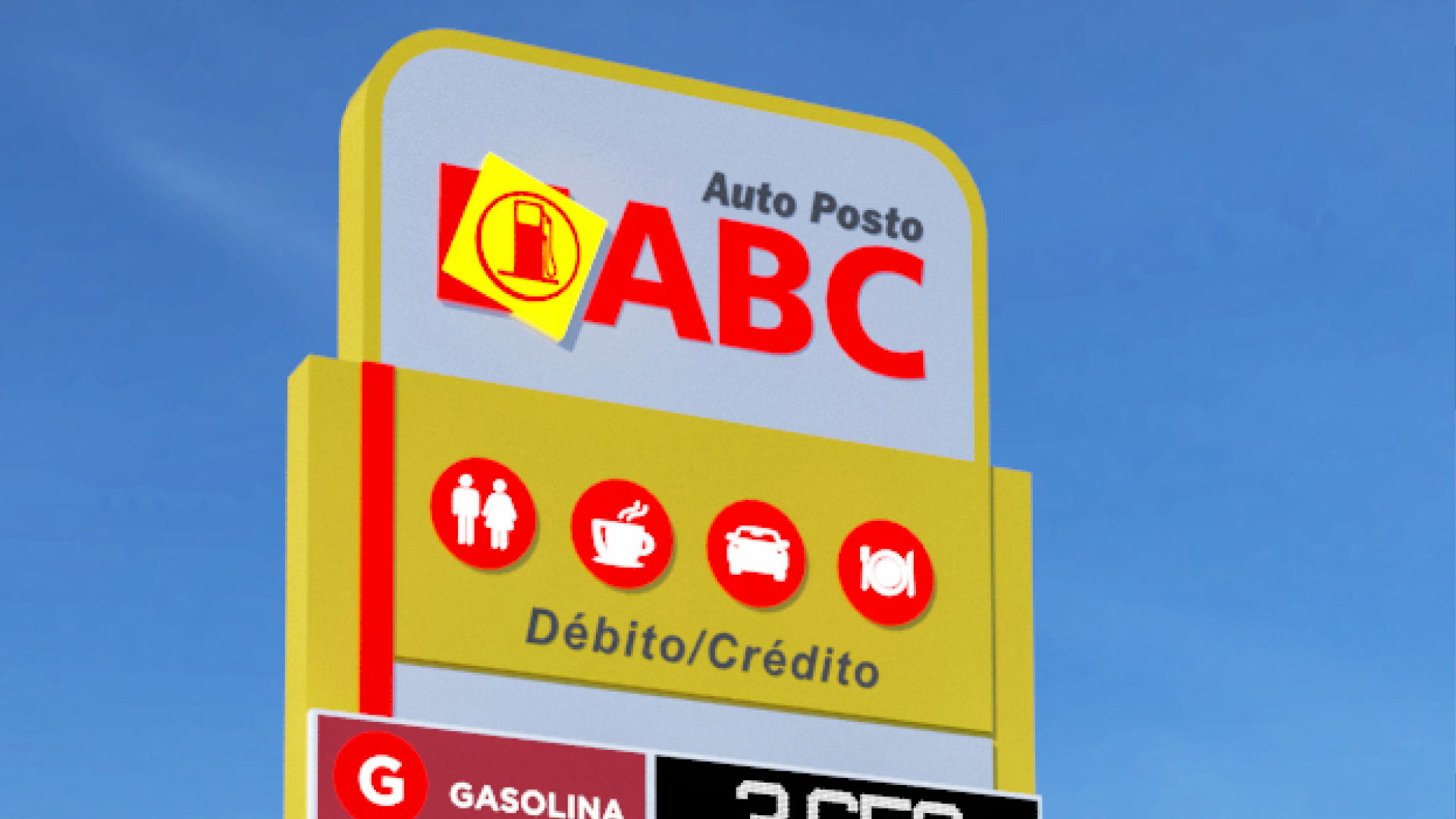
The gas station pylon sign is the first piece of signage drivers see from a distance — it can be visible from 200–500 m (roughly 650–1,650 ft) away, depending on the location and its height. It is the station’s “territory marker.” Petrol Group has designed and delivered hundreds of pylon signs across Brazil.
Types of gas station pylon signs
Price sign: shows the price of each fuel. In Brazil, the national fuel regulator (ANP) requires prices to be displayed where they can be seen from the road; in the U.S., any price-posting requirements come from your state and local sign codes, so check them with the authority having jurisdiction before designing the sign. It can be digital (an LED price sign updated remotely) or static (printed panels). Brand ID pylon: the pylon sign carrying the fuel brand — Shell or, in Brazil, Ipiranga and BR. Height: 6 to 15 m (about 20–50 ft), depending on the brand’s image manual. Custom pylon (unbranded station): designed around the station’s own brand identity. See our gas station pylon sign service.
Materials and specifications
Sign cabinet: ACM (aluminum composite material) with a PE core, 4 mm thick, with a Kynar (PVDF) finish for 15+ years of durability. Budget alternative: internally illuminated polycarbonate — lower cost, but a service life of 5–8 years. Structure: galvanized carbon steel tube, sized by the structural engineer to withstand local wind loads (in the U.S., the design wind speed comes from the building code your jurisdiction has adopted). See an example in the ACM price sign at Auto Posto ABC, in Minas Gerais, Brazil.
Height regulations
There is no single national rule for gas station pylon sign height. In Brazil, each municipality sets it in its building code; in the U.S., sign height, sign area, setbacks and illumination are set by local zoning and sign ordinances. Check with your city or county planning department (the authority having jurisdiction, AHJ) before fabrication. In Brazil, fuel brands generally specify 8–12 m (about 26–40 ft) for the brand ID pylon in their image manuals — but the local code prevails when it is stricter.
FAQ
Is a digital price sign worth the investment?
For stations that change prices often (daily, in some cases), yes — in our projects in Brazil, the cost of printing new price panels at every change exceeds the cost of the digital sign within 18–24 months.
See also: why the pylon sign matters and complete gas station signage.